British Rail Derby Lightweight
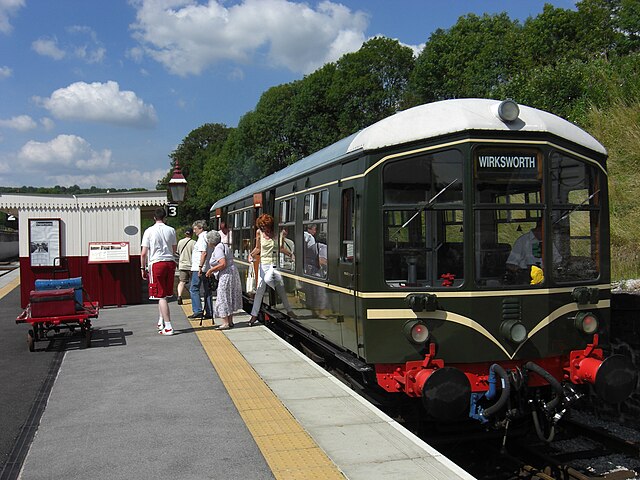
The British Rail Derby Lightweight diesel multiple units, were the first such trains to be built en-masse for British Railways. The units were built at BR's Derby Works from 1954 to 1955. The units were built in various formations, including 12 power-twin 2-car units, 84 power-trailer 2-car units, and four 4-car units. The two single car units were originally built as a two-car unit and then split two years later when demand came about.
Derby Lightweight power car no. 79018 at Bewdley on the Severn Valley Railway
The refurbished seating in the 2nd class saloons of the Trailer Car 79612 - 2021
Derby Lightweight trailer no. 975008 (79612) outside EVR maintenance shed, Wirksworth, 2021. This vehicle has been restored to original condition, and will be able to enter traffic after cab wiring has been completed and its power car, after standing idle for 19 years, has been refurbished to run with it. The twin unit is preserved at the Ecclesbourne Valley Railway - Wirksworth.
Derby Lightweight single car unit no. 79900 fully restored to passenger carrying standard again after being former test car Iris. The unit now resides on the Ecclesbourne Valley Railway running regular passenger diagrams.
Derby Litchurch Lane Works
Derby Litchurch Lane Works, formerly Derby Carriage and Wagon Works, is a railway rolling stock factory in Derby, England. It is presently owned by the multinational transportation manufacturer Alstom.
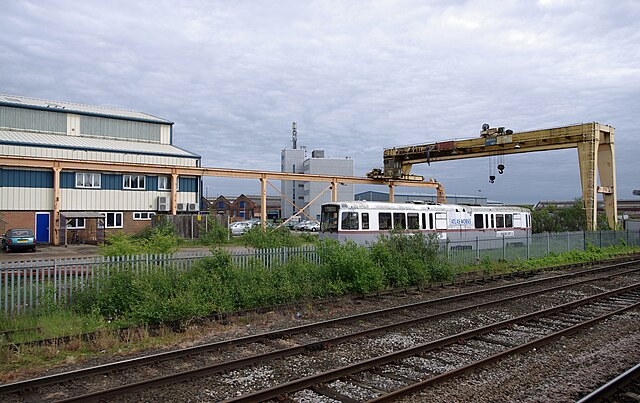
Litchurch Lane works seen from a passing train in 2011. A US Standard Light Rail Vehicle (Now scrapped) is visible, which was originally intended for use on the Manchester Metrolink network
Annual dinner of the Institution of Mechanical Engineers held in the carriage works of the Midland Railway at Derby in 1898. Samuel Johnson, the railway's Chief Mechanical Engineer was the institution president.
Preserved Derby Lightweight at Bewdley
The prototype railbus LEV1