Rail transport in Brazil began in the 19th century and there were many different railway companies. The railways were nationalized under RFFSA in 1957. Between 1999 and 2007, RFFSA was broken up and services are now operated by a variety of private and public operators, including Rumo Logística, Companhia Paulista de Trens Metropolitanos and SuperVia.
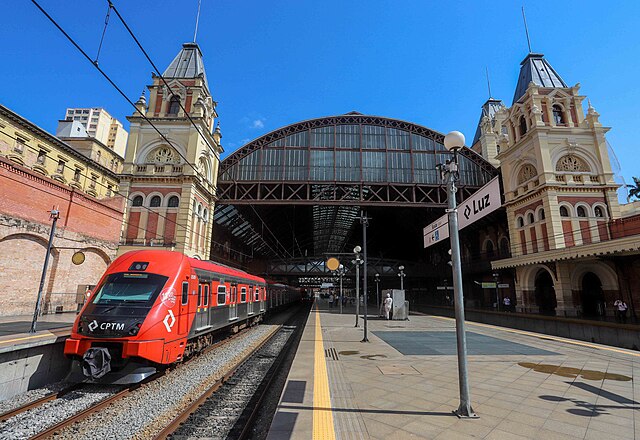
Train at Luz Station, São Paulo
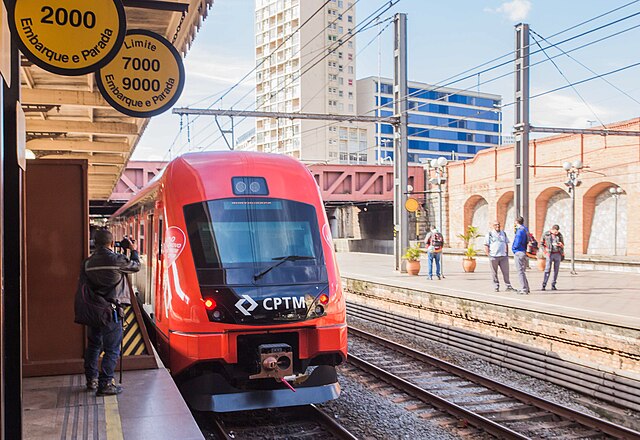
Regional rail system in São Paulo
Santa Teresa Tram in Rio de Janeiro
Interurban tramway in Campos do Jordão
The Rede Ferroviária Federal, Sociedade Anônima was the State-owned national railway company of Brazil created from Brazilian Federal Law #3.115 on March 16, 1957, after several railroads were nationalized by the Brazilian government. However, the railroad did not take full effect until September 30, 1957. The RFFSA linked 42 railways together, creating a regional system composed of 22 railroads. The goal of the RFFSA was to promote and advance the railroad sector of Brazil, creating a north-south-east-west rail network in all five regions of Brazil. But it failed and the RFFSA only served four of the five regions with a north-south rail network win 19 units of the federation of Brazil. By 1999, freight service of the railroad was liquidated and privatized, with the passenger service of the railroad liquidations occurring in 2007.
The former headquarters of the RFFSA in Juiz de Fora.
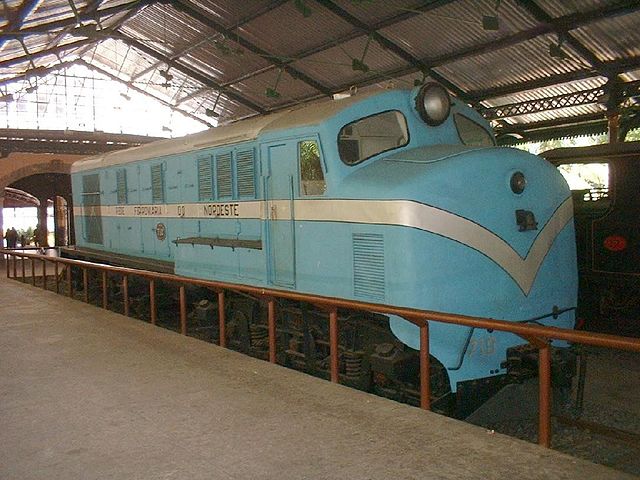
Diesel-electric locomotive built in 1953 by English Electric in England for the Rede Ferroviária do Nordeste. Operated until the 1980s.
RFFSA GE U6B #3049.
RFFSA MACOSA SD40-2 #5231-3F. Baptized with the name 'Aparecida do Norte'