History of Malaysia
Videos
Malaysia is a modern concept, created in the second half of the 20th century. However, contemporary Malaysia regards the entire history of Malaya and Borneo, spanning thousands of years back to prehis


The discovery of a skull estimated to be around 40,000 years old in the Niah Caves, in Sarawak, has been identified as the earliest evidence for human settlement in Malaysian Borneo (photo December 1958).
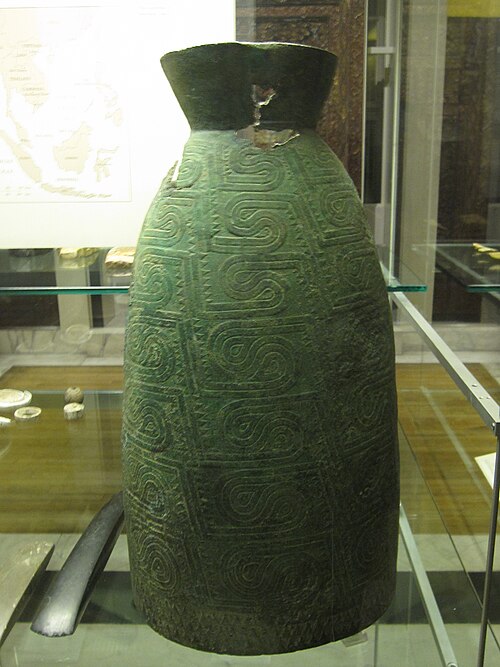
The Klang Bell, dated 200 BC–200 AD

The Buddha-Gupta stone, dating to the 4th–5th century AD, was dedicated by an Indian Merchant, Buddha Gupta. Found in Seberang Perai and kept in the National Museum, Calcutta, India.

Built in the 6th century AD, Candi Bukit Batu Pahat is the most well-known ancient Hindu temple found in Bujang Valley.
Malaysia
Videos
Malaysia is a country in Southeast Asia. A federal constitutional monarchy, it consists of 13 states and three federal territories, separated by the South China Sea into two regions: Peninsular Malays
History of Malaysia
…Malaysia is a modern concept, created in the second half of the 20th century. However, contemporary Malaysia regards the entire history of Malaya and Borneo…

The Dutch fleet battling with the Portuguese armada as part of the Dutch–Portuguese War in 1606 to gain control of Malacca
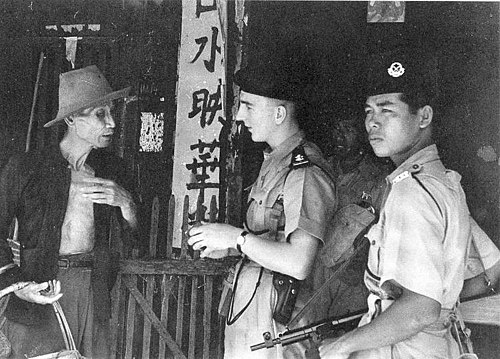
Malayan police officers questioning an ethnic Chinese civilian during the Malayan Emergency in 1949

Ibrahim Iskandar King

Anwar Ibrahim Prime Minister