House of Peers (Japan)
Videos
The House of Peers was the upper house of the Imperial Diet as mandated under the Constitution of the Empire of Japan.

House of Peers, 1915

Emperor Meiji in a formal session of the House of Peers. Ukiyo-e woodblock print by Yōshū Chikanobu, 1890

The House of Peers in 1910

Itō Hirobumi
Kazoku
Videos
The Kazoku was the hereditary peerage of the Empire of Japan, which existed between 1869 and 1947. It was formed by merging the feudal lords and court nobles into one system modelled after the British
House of Peers (Japan)
…created by an Imperial decree merging the former court nobility (kuge) and former feudal lords (daimyos) into a single new aristocratic class called the kazoku. A second imperial ordinance in 1884 grouped the kazoku into five ranks equivalent to the European aristocrats: prince (equivalent to a European duke…

Prince Tokugawa Iesato, first head of the Tokugawa clan after the overthrow of the shogunate, was President of the House of Peers from 1903 to 1933.

The interior of the Peers' Club, Tokyo (1912). Unlike Western-style gentlemen's clubs, membership was also open to women.
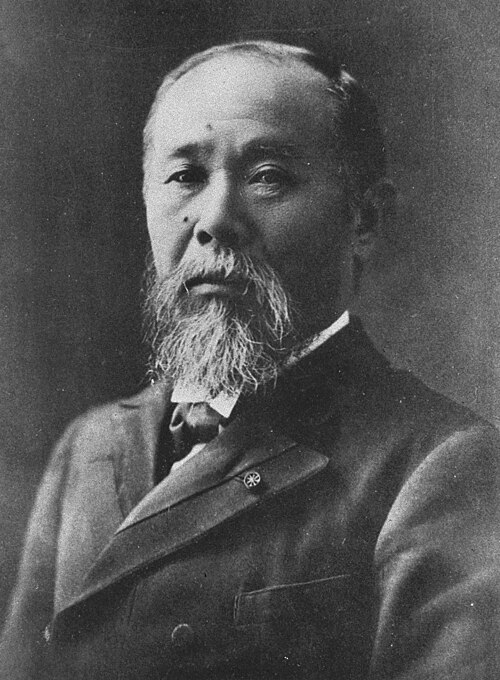
Japan's first Prime Minister Itō Hirobumi, despite being born the son of an impoverished farmer, he was ennobled as prince.