A jump scare is a scaring technique used in media, particularly in films such as horror films and video games such as horror games, intended to scare the viewer by surprising them with an abrupt change in image or event, usually co-occurring with a loud, jarring sound. The jump scare has been described as "one of the most basic building blocks of horror movies". Jump scares can startle the viewer by appearing at a point in the film where the soundtrack is quiet and the viewer is not expecting anything alarming to happen, or can be the sudden payoff to a long period of suspense.
The poster for Cat People (1942), which featured the Lewton Bus technique, considered the first jump scare
Horror is a film genre that seeks to elicit fear or disgust in its audience for entertainment purposes.
Max Schreck as Count Orlok in the 1922 film Nosferatu. Critic and historian Kim Newman declared it as a film that set the template for the horror film.
Mirrors are often used to create a sense of tension in horror films.
Filmmaker and composer John Carpenter, who has directed and scored numerous horror films, performing in 2016
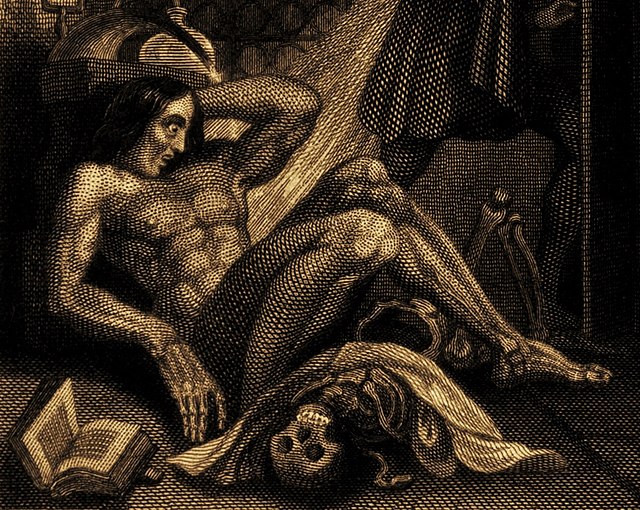
Frankenstein's monster