Louisiana (New Spain)
Videos
Louisiana was a province of New Spain from 1762 to 1801. It was primarily located in the center of North America encompassing the western basin of the Mississippi River plus New Orleans. The area had

De Soto claiming the Mississippi, as depicted in the United States Capitol rotunda.

The Cabildo in New Orleans, originally called "Casa Capitular", served as the headquarters for the Spanish governor when Louisiana was under Spanish rule. The building today showcases a mix of designs: the preserved Spanish colonial features like the two-story layout with wraparound balconies and rounded arches, was later added in 1847 a revival French-inspired mansard roofs. Capping it all off is a dome-like turret that gives a nod to its Spanish roots.

An 1815 engraving of the Plaza de Armas of New Orleans. From left are the Cabildo, St. Louis Cathedral, and the Presbytère.

Señora de Balderes and her baby, family native of Nueva Orleans, Spanish colonial Louisiana, by José Francisco de Salazar (painter born in Mérida, Mexico), ca. 1790. The family lived on Calle Real street in what is now called the "French Quarter". Louisiana State Museum
Illinois Country
Videos
The Illinois Country, also referred to as Upper Louisiana, was a vast region of New France claimed in the 1600s that later fell under Spanish and British control before becoming what is now part of th
Louisiana (New Spain)
…post of St. Louis and all of Upper Louisiana in the late 1760s, though there was little Spanish presence in the wide expanses of what they called the "Illinois Country". New Orleans was the main port of entry for Spanish supplies sent to American forces during the American Revolution, and Spain and the new United…

Illinois Country (Pais des Ilinois (sic)) 1717

Reconstructed curtain and gatehouse of Fort de Chartres
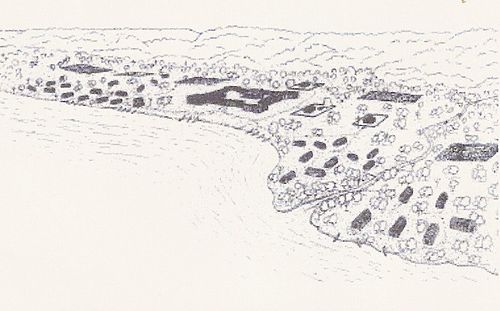
Fort Pimiteoui (Old Peoria) circa 1702

French Church of the Holy Family in Cahokia