Magnoliids, Magnoliidae or Magnolianae are a clade of flowering plants. With more than 10,000 species, including magnolias, nutmeg, bay laurel, cinnamon, avocado, black pepper, tulip tree and many others, it is the third-largest group of angiosperms after the eudicots and monocots. The group is characterized by trimerous flowers, pollen with one pore, and usually branching-veined leaves.
Magnoliids
Flower of Magnolia obovata, showing multiple petals, stamens, and pistils.
The avocado has been cultivated in the Americas for thousands of years.
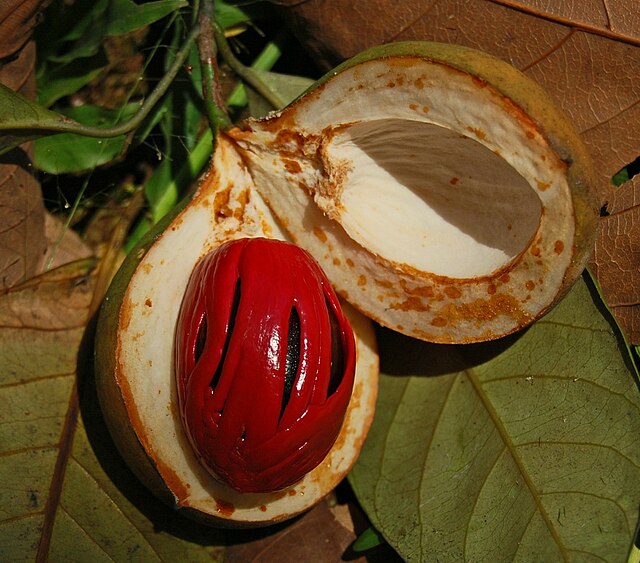
Nutmeg fruits are a source of the hallucinogen myristicin.
Flowering plants are plants that bear flowers and fruits, and form the clade Angiospermae, commonly called angiosperms. They include all forbs, grasses and grass-like plants, a vast majority of broad-leaved trees, shrubs and vines, and most aquatic plants. The term "angiosperm" is derived from the Greek words ἀγγεῖον / angeion and σπέρμα / sperma ('seed'), meaning that the seeds are enclosed within a fruit. They are by far the most diverse group of land plants with 64 orders, 416 families, approximately 13,000 known genera and 300,000 known species. Angiosperms were formerly called Magnoliophyta.
Image: Ranunculus repens 1 (cropped)
Image: Nymphaea alba flower and leaves DSC 3326w
Image: Meadow Foxtail head
Image: Apple blossom. Eastern Siberia