Orion (constellation)
Videos
Orion is a prominent set of stars visible during winter in the northern celestial hemisphere. It is one of the 88 modern constellations; it was among the 48 constellations listed by the 2nd-century AD
Click on to see large image.


The constellation of Orion, as it can be seen by the naked eye. Lines have been drawn.

Orion as depicted in Urania's Mirror, a set of star chart cards published in London c. 1825
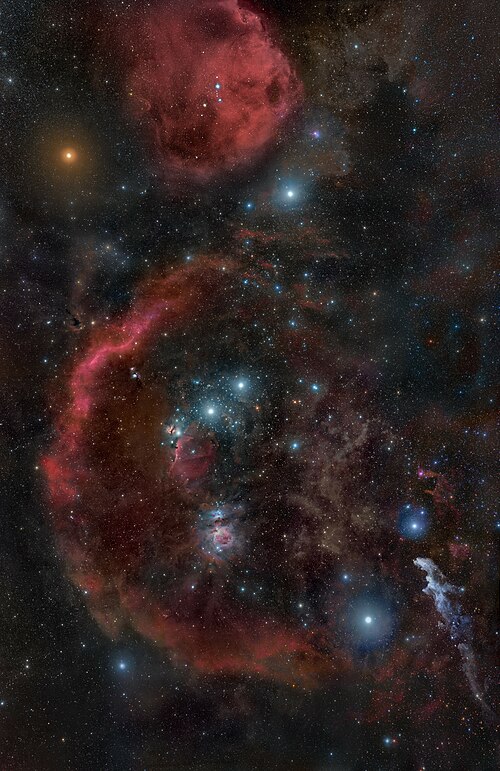
This view brings out many fainter features, such as Barnard's Loop.
Orion's Belt
Videos
Orion's Belt is an asterism in the constellation of Orion. Other names include the Belt of Orion, the Three Kings, and the Three Sisters. The belt consists of three bright and easily identifiable coll
Orion (constellation)
…are supergiants and slightly variable. There are a further six stars brighter than magnitude 3.0, including three making the short straight line of the Orion's Belt asterism. Orion also hosts the radiant of the annual Orionids, the strongest meteor shower associated with Halley's Comet, and the Orion Nebula, one…

Orion's Belt and nebulosity, including the Flame Nebula (left) and Horsehead Nebula (lower left) named after a relatively small dark cloud, rotated 90° somewhat resembling a seahorse

Dunhuang Star Atlas – Orion
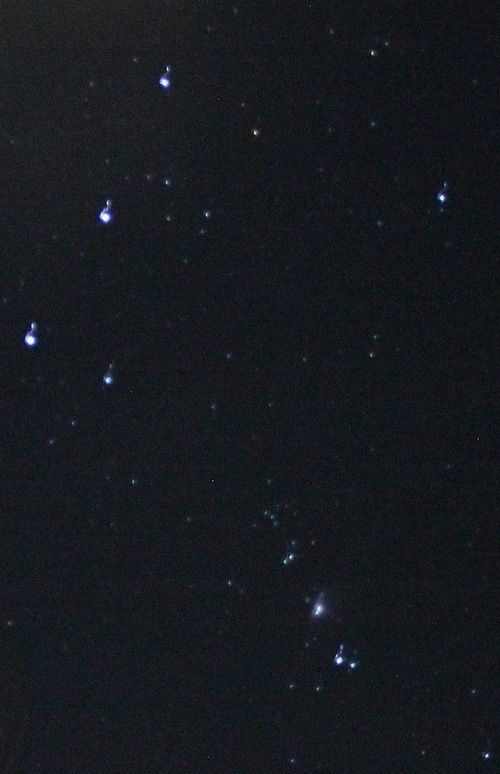
Orion's belt at top left, Orion's sword at bottom right