Queen Victoria
Videos
Victoria was Queen of the United Kingdom of Great Britain and Ireland from 20 June 1837 until her death in 1901. Her reign of 63 years and 216 days, which was longer than those of any of her predecess

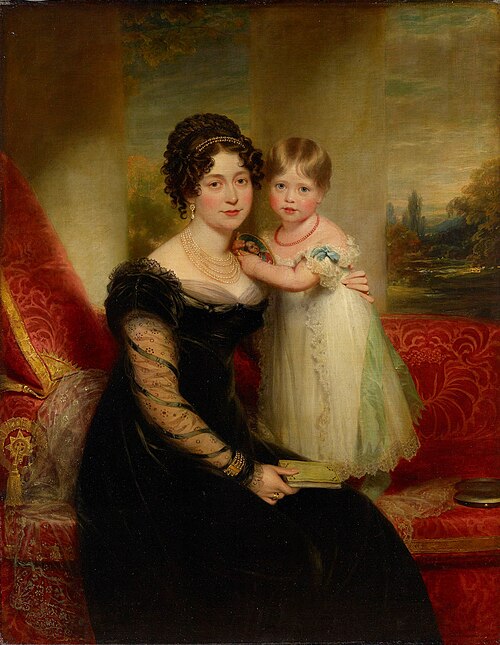
Victoria as a child with her mother, by William Beechey
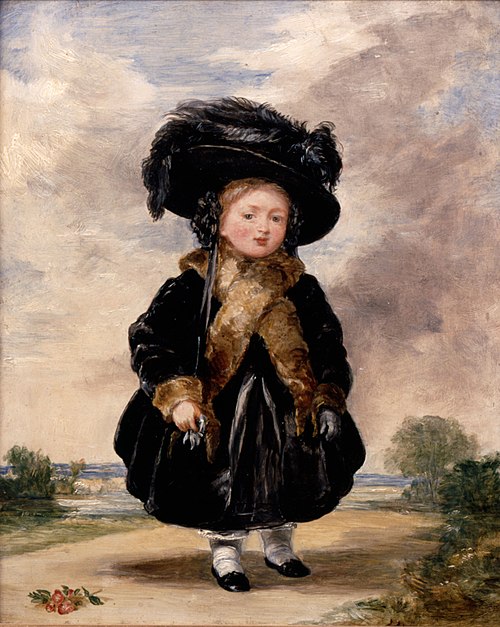
Portrait by Stephen Poyntz Denning, 1823

Portrait with her spaniel Dash by George Hayter, 1833
Prince Edward, Duke of Kent and Strathearn, was the fourth son and fifth child of King George III and Queen Charlotte. His only legitimate child, Victoria, became Queen of the United Kingdom 17 years
Queen Victoria
…expansion of the British Empire. In 1876, the British parliament voted to grant her the additional title of Empress of India. Victoria was the daughter of Prince Edward, Duke of Kent and Strathearn, who was the fourth son of King George III. After the deaths of her father and grandfather in 1820, she was raised under close supervision by her mother…

Portrait by Sir William Beechey, 1818

Edward aged eleven (right) and his older brother William, portrait by Benjamin West, 1778

Prince Edward in 1782, portrait by Thomas Gainsborough

Prince Edward, Duke of Kent, Commander-in-Chief, North America, 1791–1802