Vulcan (mythology)
Videos
Vulcan is the god of fire including the fire of volcanoes, deserts, metalworking and the forge in ancient Roman religion and myth. He is often depicted with a blacksmith's hammer. The Vulcanalia was t
A fresco of Vulcan-Hephaestus in Pompeii

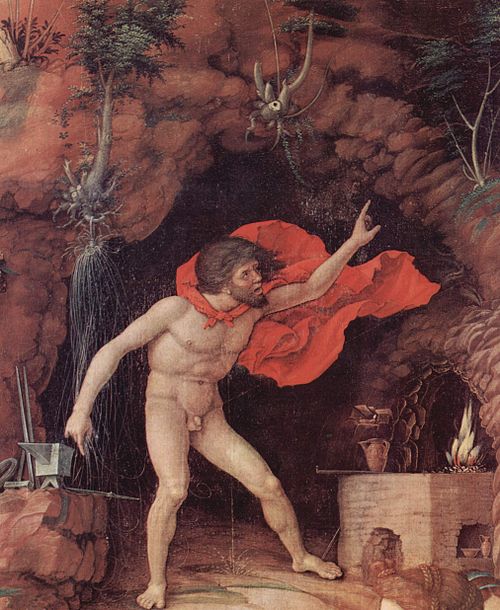
Andrea Mantegna: Parnassus (detail): Vulcan, god of fire (1497)
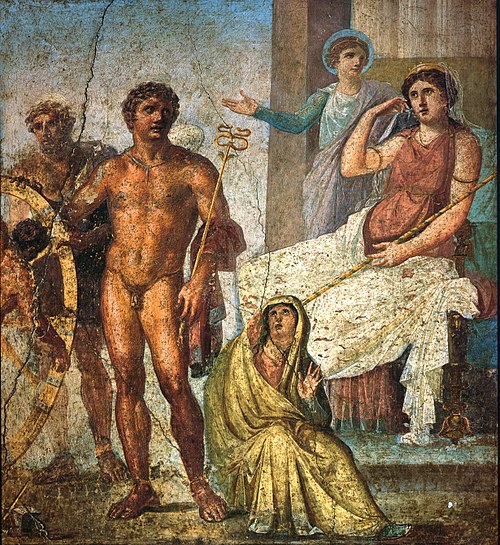
Punishment of Ixion: in the center is Mercury holding the caduceus and on the right Juno sits on her throne. Behind her Iris stands and gestures. On the left is Vulcanus (blond figure) standing behind the wheel, manning it, with Ixion already tied to it. Nephele sits at Mercury's feet; a Roman fresco from the eastern wall of the triclinium in the House of the Vettii, Pompeii, Fourth Style (60–79 AD).

Venus in the Forge of Vulcan by Pieter Thijs
Hephaestus
Videos
Hephaestus is the Greek god of artisans, blacksmiths, carpenters, craftsmen, fire, metallurgy, metalworking, sculpture, and volcanoes. In Greek mythology, Hephaestus was the son of Hera, either on her
Vulcan (mythology)
…and myth. He is often depicted with a blacksmith's hammer. The Vulcanalia was the annual festival held August 23 in his honor. His Greek counterpart is Hephaestus, the god of fire and smithery. In Etruscan religion, he is identified with Sethlans. Vulcan belongs to the most ancient stage of Roman religion: Varro…

Hephaestus (left) hands to Thetis the armour of Achilles. Berlin Foundry Cup, an Attic red-figure kylix, c. 500–490 BC

The Doric Temple of Hephaestus, Agora of Athens
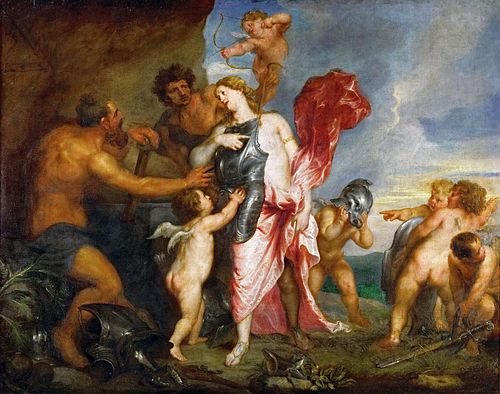
Thetis Receiving the Weapons of Achilles from Hephaestus by Anthony van Dyck (1630–1632)
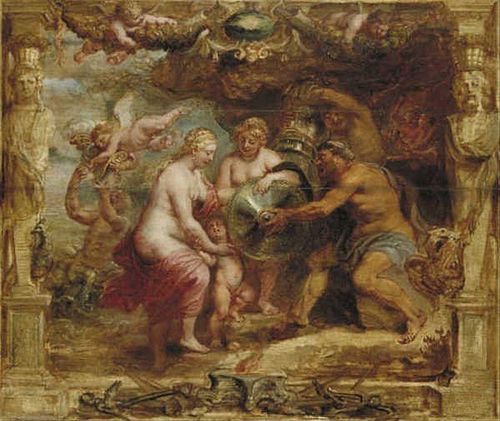
Vulcan Presenting the Arms of Achilles to Thetis by Peter Paul Rubens.