Ashoka
Videos
Ashoka, also known as Asoka or Aśoka, most commonly known as Ashoka the Great, was Emperor of Magadha from c. 268 BCE until his death, and the third ruler from the Mauryan dynasty. His empire covered

A c. 1st century BCE / CE relief from Sanchi, showing Ashoka on his chariot, visiting the Ramagrama

Ashoka's Major Rock Edict at Junagadh contains inscriptions by Ashoka (fourteen of the Edicts of Ashoka), Rudradaman I and Skandagupta.
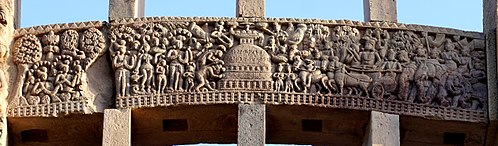
King Ashoka visits Ramagrama, to take relics of the Buddha from the Nagas, but in vain. Southern gateway, Stupa 1, Sanchi.

Ruins of pillared hall at Kumrahar site at Pataliputra
Karuvaki
Videos
Karuvaki was the "Second Queen Consort" of the third Mauryan Emperor, Ashoka. She was Ashoka's fourth wife and 2nd Empress consort. She was the mother of Ashoka's fourth son, Prince Tivala.
Ashoka
…or Theravali, which mention Ashoka. Various sources mention five consorts of Ashoka: Devi (or Vedisa-Mahadevi-Shakyakumari), Asandhimitra, Padmavati, Karuvaki and Tishyarakshita. Karuvaki is the only queen of Ashoka known from his own inscriptions: she is mentioned in an edict inscribed on a pillar at Allahabad…

The "Queen's edict" in Prayagraj mentions the charitable deeds of Karuvaki.