On 6 and 9 August 1945, the United States detonated two atomic bombs over the Japanese cities of Hiroshima and Nagasaki. The bombings killed between 129,000 and 226,000 people, most of whom were civilians, and remain the only use of nuclear weapons in an armed conflict. Japan surrendered to the Allies on 15 August, six days after the bombing of Nagasaki and the Soviet Union's declaration of war against Japan and invasion of Japanese-occupied Manchuria. The Japanese government signed the instrument of surrender on 2 September, effectively ending the war.

Atomic bomb mushroom clouds over Hiroshima (left) and Nagasaki (right)

Situation of the Pacific War on 1 August 1945. White and green: Areas controlled by Japan Red: Areas controlled by the Allies Gray: Areas controlled by the Soviet Union (neutral)
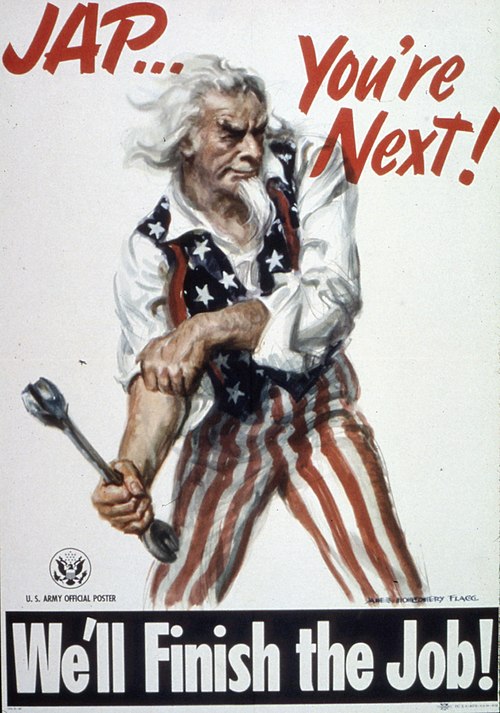
U.S. Army propaganda poster depicting Uncle Sam preparing the public for the invasion of Japan after the end of the war with Germany and Italy

A B-29 over Osaka on 1 June 1945
End of World War II in Asia
Videos
World War II officially ended in Asia on September 2, 1945, with the surrender of Japan on the USS Missouri. Before that, the United States dropped two atomic bombs on Japan, and the Soviet Union declared war on Japan, causing Emperor Hirohito to announce the acceptance of the Potsdam Declaration on August 15, 1945, which would eventually lead to the surrender ceremony on September 2.

From left to right: Clement Attlee, Harry S. Truman, and Joseph Stalin at the Potsdam Conference.
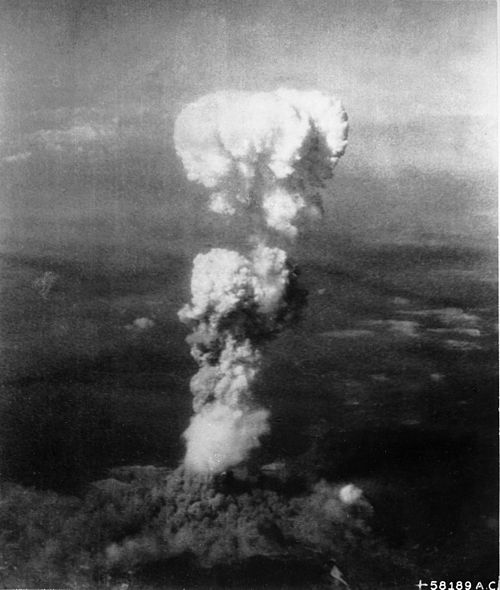
Atomic cloud over Hiroshima after "Little Boy" is dropped on the city

Minister of Foreign Affairs Mamoru Shigemitsu signs the instrument of surrender on USS Missouri in Tokyo Bay on September 2, 1945.

Generalissimo Chiang Kai-shek, March 1945