Bongo drum
Videos
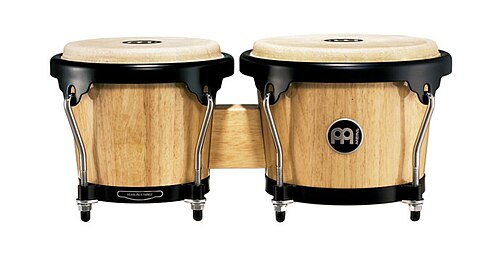
Bongos are an Afro-Cuban percussion instrument consisting of a pair of small open bottomed hand drums of different sizes. The pair consists of the larger hembra and the smaller macho, which are joined

Grupo Changüí de Guantánamo in 1962. The bongosero (left) is playing bongó de monte, which is much taller than the standard bongó.

Desi Arnaz playing a bokú in the 1940s. His father had banned the bongos 20 years earlier. The bokú is the most likely ancestor of the bongos.
Conga
Videos
The conga, also known as tumbadora, is a tall, narrow, single-headed drum from Cuba. Congas are staved like barrels and classified into three types: quinto, tres dos or tres golpes, and tumba or salid
Latin Percussion conga drum exhibited at the National Museum of World Cultures in Amsterdam


A pair of congas (front) with a pair of bongos (back) mounted on top. The combination of congas and bongos was pioneered by Cándido Camero in New York City.

New LP Classic Congas

Playing three congas; one microphone is for the vocals and the other for the congas.