Collective leadership in the Soviet Union
Collective leadership, or collectivity of leadership, was considered the ideal form of governance in the Union of Soviet Socialist Republics (USSR) and other socialist states espousing communism. Its main task was to distribute powers and functions among the Politburo and the Central Committee of the Communist Party of the Soviet Union, as well as the Council of Ministers, to hinder any attempts to create a one-man dominance over the Soviet political system by a Soviet leader, such as that seen under Joseph Stalin's rule. On the national level, the heart of the collective leadership was officially the Central Committee of the Communist Party. Collective leadership was characterised by limiting the powers of the General Secretary and the Chairman of the Council of Ministers as related to other offices by enhancing the powers of collective bodies, such as the Politburo.

Georgy Malenkov, the Premier of the Soviet Union, emerged as one of the major contenders for the Soviet leadership in 1953, but lost to Khrushchev in 1955.
Georgy Malenkov
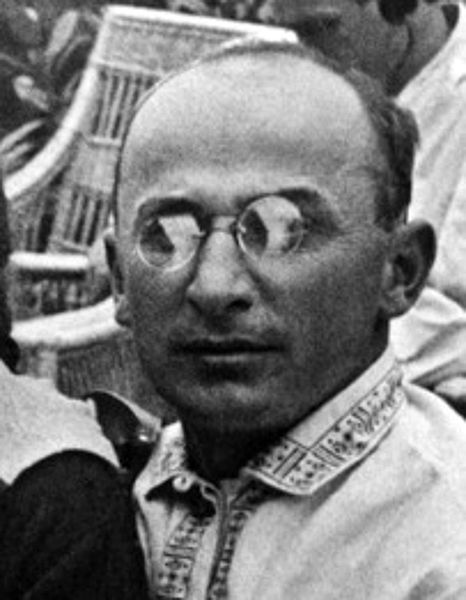
Lavrentiy Beria
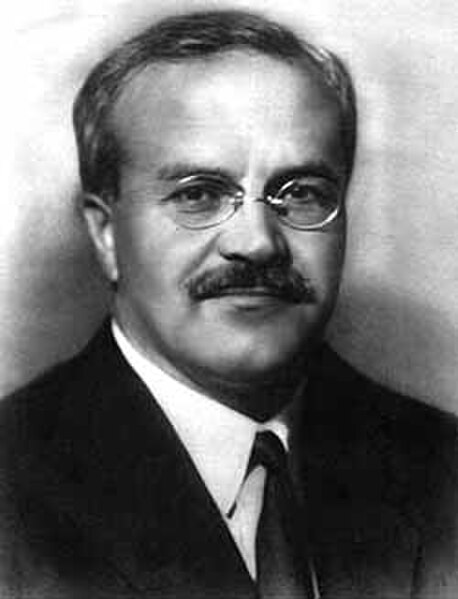
Vyacheslav Molotov
Joseph Vissarionovich Stalin was a Georgian-born Soviet politician and revolutionary who was the longest-serving leader of the Soviet Union from 1924 until his death in 1953. He held power as General Secretary of the Communist Party from 1922 to 1952, and as Chairman of the Council of Ministers from 1941 until his death. Initially governing the country as part of a collective leadership, Stalin consolidated his power to become a dictator by the 1930s. Ideologically, he formalised his Leninist interpretation of Marxism as Marxism–Leninism, while the political and economic system he implemented is known as Stalinism.
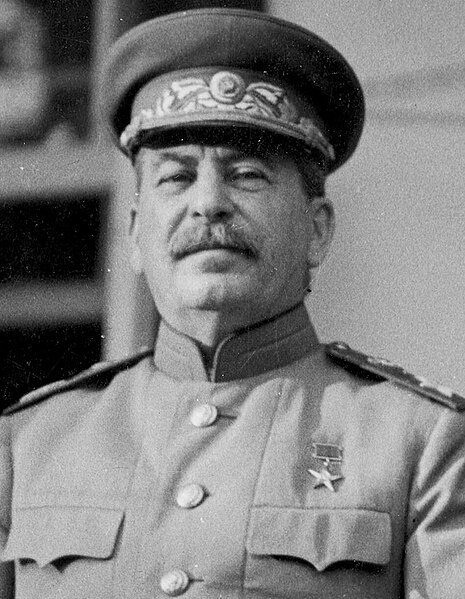
Stalin in 1943
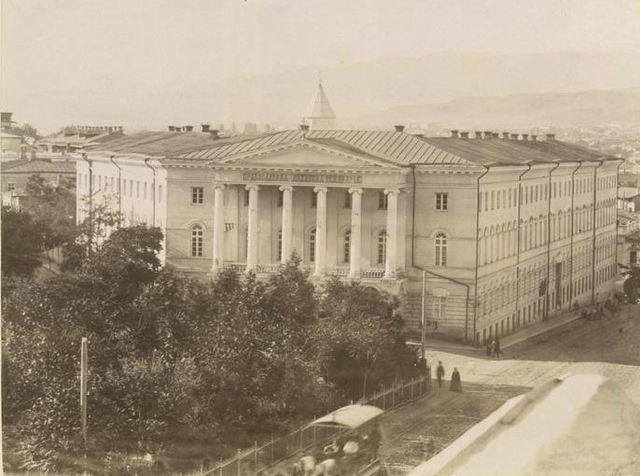
In 1894, Stalin began his studies at the Tiflis Theological Seminary (pictured here in the 1870s).
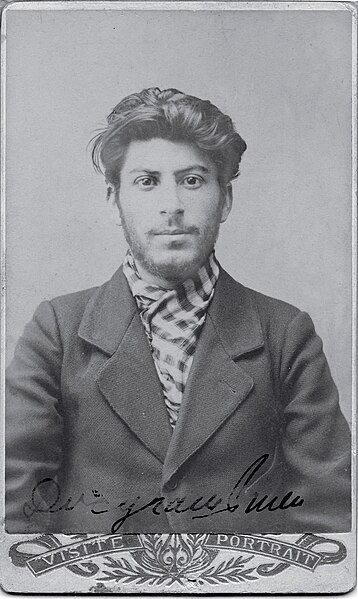
Police photograph of Stalin, taken in 1902
Stalin first met Vladimir Lenin at a 1905 conference in Tampere, in the Grand Duchy of Finland. Lenin became "Stalin's indispensable mentor".