Falsifiability
Videos
Falsifiability is a deductive standard of evaluation of scientific theories and hypotheses, introduced by the philosopher of science Karl Popper in his book The Logic of Scientific Discovery (1934). A theory or hypothesis is falsifiable if it can be logically contradicted by an empirical test.

Here are two black swans, but even with no black swans to possibly falsify it, "All swans are white" would still be shown falsifiable by "Here is a black swan"—a black swan would still be a state of affairs, only an imaginary one.

A black-bodied and white-bodied peppered moth

Clyde Cowan conducting the neutrino experiment (c. 1956)

Image: Guido Reni Michael Defeats Satan
Pseudoscience
Videos
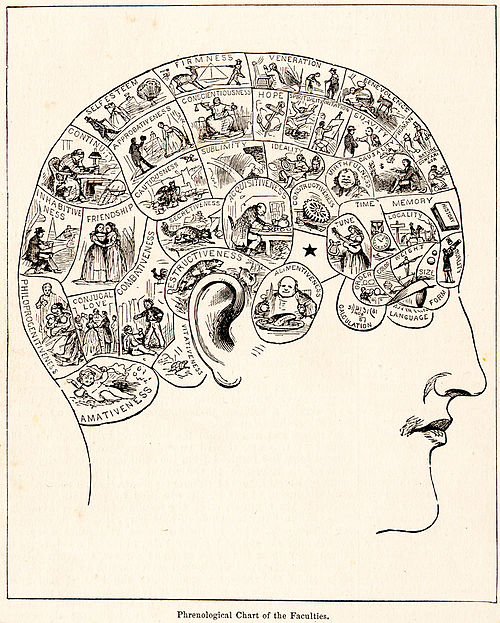
Pseudoscience consists of statements, beliefs, or practices that claim to be both scientific and factual but are incompatible with the scientific method. Pseudoscience is often characterized by contradictory, exaggerated or unfalsifiable claims; reliance on confirmation bias rather than rigorous attempts at refutation; lack of openness to evaluation by other experts; absence of systematic practices when developing hypotheses; and continued adherence long after the pseudoscientific hypotheses have been experimentally discredited. It is not the same as junk science.

The astrological signs of the zodiac

Homeopathic preparation Rhus toxicodendron, derived from poison ivy