Gaius Gracchus
Videos
Gaius Sempronius Gracchus was a reformist Roman politician and soldier who lived during the 2nd century BC. He is best known for his plebeian tribunates in 123 and 122 BC, during which he proposed a w
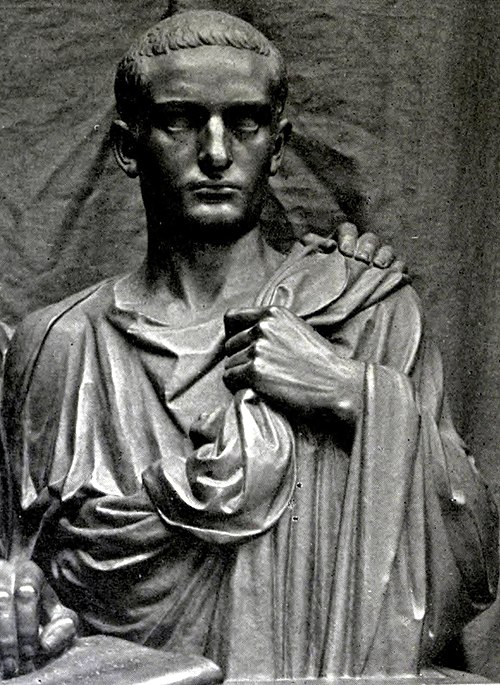
A bust of Gaius from a 19th century commemorative sculpture of the Gracchi brothers by Eugène Guillaume
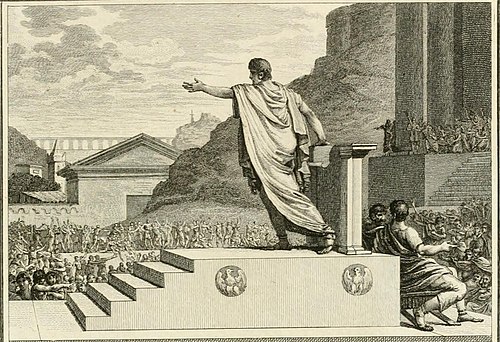
Depiction of Gaius addressing the concilium plebis.

The Death of Gaius Gracchus, by François Topino-Lebrun, 1792.
Gracchi brothers
Videos
The Gracchi brothers were two brothers who lived during the beginning of the late Roman Republic: Tiberius Gracchus and Gaius Gracchus. They served in the plebeian tribunates of 133 BC and 122–121 BC,
Gaius Gracchus
…also killed in political unrest that year. They were the sons of the Gracchus who was consul in 177 and 163 BC. The two brothers, known together as the Gracchi brothers, are often associated due to Gaius' own political self-representation and its transmission to contemporary times in Plutarch's Parallel Lives. The…

Depiction of the two brothers made during the 19th century by Eugene Guillaume, today located at the Musée d'Orsay in Paris. The brothers lay their hands on a document titled "property", consistent with then-current interpretations of their lives.

Denarius of Gaius Minucius Augurinus, 135 BC, depicting the columna Minucia, which itself showed a grain distribution by Lucius Minucius Augurinus. It shows that grain distribution was already a hot topic several years before Tiberius' tribunate. He or his brother Tiberius probably replaced Octavius as tribune in 133.

Denarius of Marcus Marcius minted in 134 BC. The modius on the obverse and the corn-ears on the reverse refer to his ancestor Manius Marcius, plebeian aedile c. 440 BC, who made a distribution of grain at a cheap price of 1 as per modius.

A 1794 engraving of the French agitator and revolutionary, François-Noël "Gracchus" Babeuf. Babeuf also wrote a newspaper called Le tribun du peuple (Tribune of the People). Babeuf was executed in 1797 for attempting to overthrow the French Directory.