James Lovelock
Videos
James Ephraim Lovelock was an English independent scientist, environmentalist and futurist. He is best known for proposing the Gaia hypothesis, which postulates that the Earth functions as a self-regu
Lovelock in 2005


Electron capture detector developed by Lovelock in the Science Museum, London

The study of planetary habitability is partly based upon extrapolation from knowledge of the Earth's conditions, as the Earth is the only planet currently known to harbour life (The Blue Marble, 1972 Apollo 17 photograph).

Lovelock in 2005
Gaia hypothesis
Videos
The Gaia hypothesis, also known as the Gaia theory, Gaia paradigm, or the Gaia principle, proposes that living organisms interact with their inorganic surroundings on Earth to form a synergistic and s
James Lovelock
…Ephraim Lovelock (26 July 1919 – 26 July 2022) was an English independent scientist, environmentalist and futurist. He is best known for proposing the Gaia hypothesis, which postulates that the Earth functions as a self-regulating system. With a PhD in the chemistry of disinfection, Lovelock began his career performing…

Levels of gases in the atmosphere in 420,000 years of ice core data from Vostok, Antarctica research station. Current period is at the left.
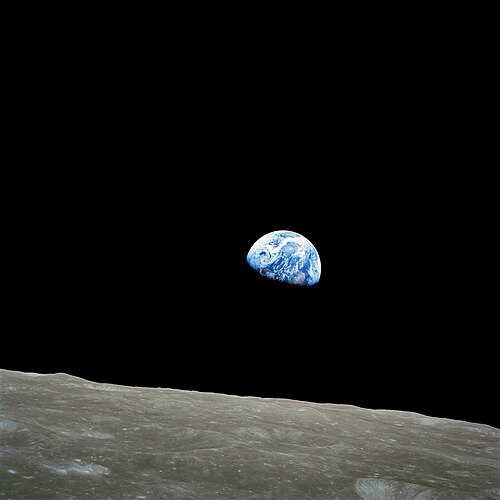
Earthrise taken from Apollo 8 by astronaut William Anders, December 24, 1968