Kayak
Videos
A kayak is a small, narrow human-powered watercraft typically propelled by means of a long, double-bladed paddle. The word kayak originates from the Greenlandic word qajaq.

Whitewater kayaker at Great Falls, Virginia, United States
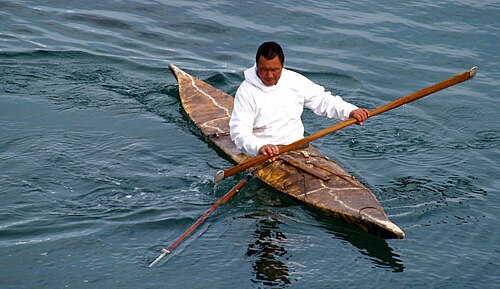
Inuit seal hunter in a kayak, armed with a harpoon

Interior 360 degree photosphere of a kayak at the Smithsonian National Museum of the American Indian. Click for an immersive 360 degree view.

Kayaks are often used to get closer to marine animals, such as sea otters.
Yupik peoples
Videos
The Yupik are a group of Indigenous or Aboriginal peoples of western, southwestern, and southcentral Alaska and the Russian Far East. They are related to the Inuit and Iñupiat. Yupik peoples include the following:Alutiiq, or Sugpiaq, of the Alaska Peninsula and coastal and island areas of southcentral Alaska.
Yupʼik or Central Alaskan Yupʼik of the Yukon–Kuskokwim Delta, the Kuskokwim River, and along the northern coast of Bristol Bay as far east as Nushagak Bay and the northern Alaska Peninsula at Naknek River and Egegik Bay in Alaska.
Siberian Yupik, including Naukan, Chaplino, and—in a linguistic capacity—the Sirenik of the Russian Far East and St. Lawrence Island in western Alaska.
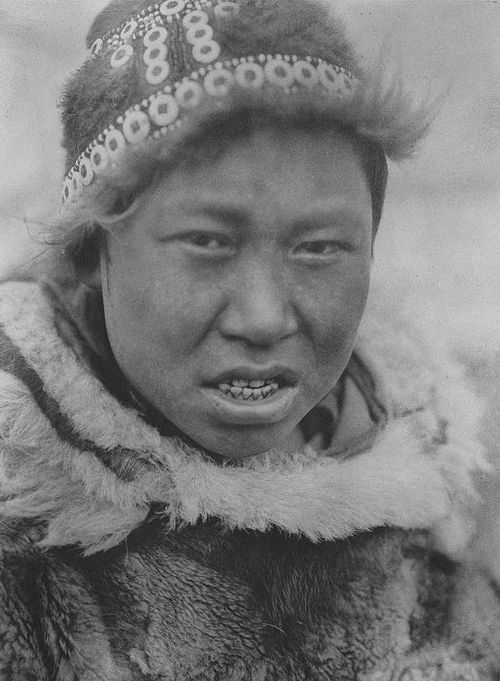

A Nunivak Cupʼig man with raven maskette in 1929; the raven (Cupʼig language: tulukarug) is Ellam Cua or the creator deity in the Cupʼig mythology

House Speaker Nancy Pelosi (left) swears in Mary Peltola as her husband, Gene (center), looks on. Peltola is a Yupʼik from Western Alaska.

Yupʼik mask, Sitka, Alaska, collection of the Alaska State Museum