Morris dance
Videos
Morris dancing is a form of English folk dance. It is based on rhythmic stepping and the execution of choreographed figures by a group of dancers in costume, usually wearing bell pads on their shins,

Morris dancers with handkerchiefs in York
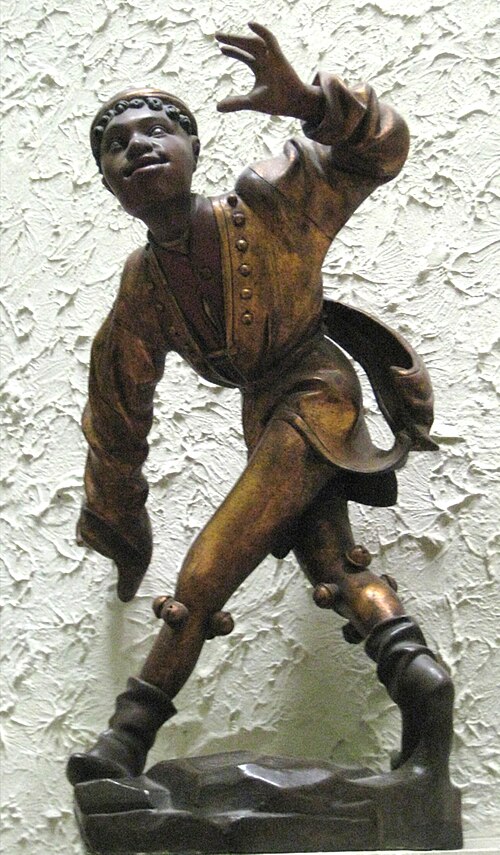
One of Erasmus Grasser's small Moriskentänzer statues from 1480, showing what would have been termed a "moorish" dancer, where seven of the other nine surviving carvings are fairer-skinned. All wear bells on their legs.

Illustration of William Kempe, Morris dancing from London to Norwich in 1600

Morris dancers and a hobby horse: detail of Thames at Richmond, with the Old Royal Palace, c. 1620
Blackface and Morris dancing
Videos
Multiple theories exist about the origins of the theatrical practice of blackface as a caricature of black people. One interpretation is that it can be traced back to traditions connected with Morris
Morris dance
…meaning 'Moorish'. Cecil Sharp, whose collecting of Morris dances preserved many from extinction, suggested that it might have arisen from the dancers' blacking their faces as part of the necessary ritual disguise. The name is first recorded in English in the mid-15th century as Morisk dance, moreys daunce, morisse daunce…

Silurian Border Morris Men, at Saddleworth Rushcart, August 2013

The Widders dancing at Chepstow Apple Day, 2013