Parachute
Videos
A parachute is a device used to slow the motion of an object through an atmosphere by creating drag or, in a ram-air parachute, aerodynamic lift. A major application is to support people, for recreation or as a safety device for aviators, who can exit from an aircraft at height and descend safely to earth.


The oldest known depiction of a parachute, attributed to Taccola (Italy, 1470s)

Fausto Veranzio's parachute design, titled Homo Volans ("Flying Man"), from his Machinae Novae ("New Contraptions", published in 1615 or 1616)

Louis-Sébastien Lenormand jumps from the tower of the Montpellier observatory, 1783. Illustration from the late 19th century.
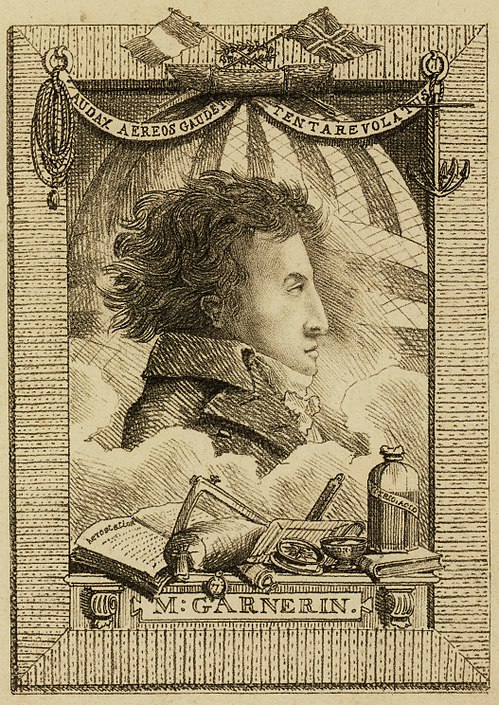
André-Jacques Garnerin
Videos
André-Jacques Garnerin was a French balloonist and the inventor of the frameless parachute. He was appointed Official Aeronaut of France.

Monsieur and Madame Garnerin (Christoph Haller von Hallerstein, c. 1803)

Citoyenne Henri accompanies Garnerin on a highly publicised and controversial flight on 8 July 1798

Schematic depiction of Garnerin's first parachute used in the Parc Monceau descent of 22 October 1797. Illustration dates from the early nineteenth century.