Pharaoh
Videos
The Pharaoh was the monarch of ancient Egypt. The title came into use from the Eighteenth Dynasty onwards and was subsequently attributed to all the previous kings of Egypt. Before this Pharaoh was a
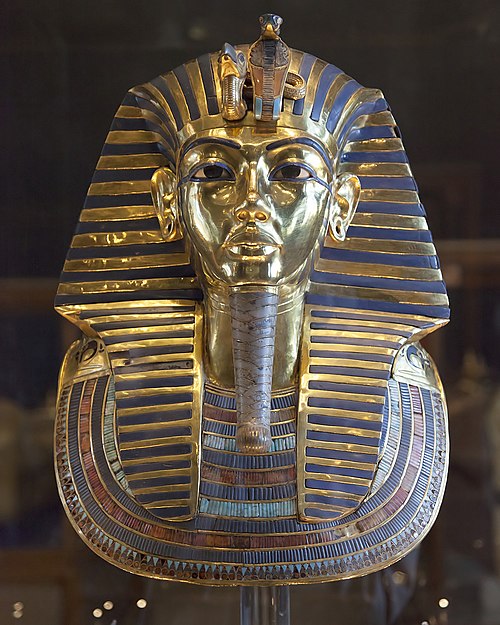
The Mask of Tutankhamun from tomb KV62 in the Valley of the Kings. Pharaohs' tombs were provided with vast quantities of wealth

The Narmer Palette depicts the unification of the Two Lands.

A guardian statue wearing the red crown which reflected the facial features of the reigning king, probably Amenemhat II or Senwosret II, and which functioned as a divine guardian for the imiut. Made of cedar wood and plaster c. 1919–1885 BCE

Uraeus depicted on king Den, ivory label found at his tomb in Abydos, c. 3000 BCE, British Museum, London
Cleopatra
Videos
Cleopatra VII Thea Philopator was Queen of the Ptolemaic Kingdom of Egypt from 51 to 30 BC, and the last active Hellenistic pharaoh. A member of the Ptolemaic dynasty, she was a descendant of its foun
Pharaoh
…hieroglyphic inscriptions and is known only from demotic papyri. While it is attested for queens regnant like Cleopatra II and Cleopatra III, as well Cleopatra VII, it was also granted to the two royal consorts who were not recognized as heads of state by administrative records: Berenice II and Cleopatra I Syra…

The Berlin Cleopatra, a Roman sculpture of Cleopatra wearing a royal diadem, mid-1st century BC, now in the Altes Museum, Germany
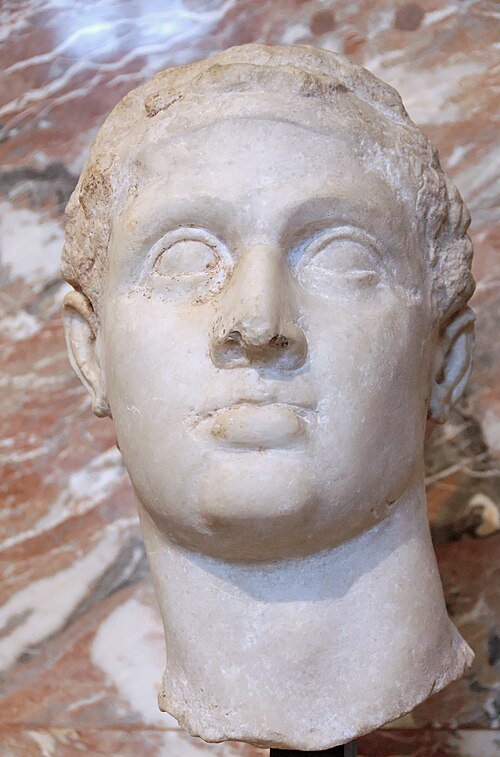
Hellenistic portrait of Ptolemy XII Auletes, the father of Cleopatra, in the Louvre, Paris

Most likely a posthumously painted portrait of Cleopatra with red hair and her distinct facial features, wearing a royal diadem and pearl-studded hairpins, from Roman Herculaneum, Italy, 1st century AD

A Roman portrait of Pompey made during the reign of Augustus (27 BC – 14 AD), a copy of an original from 70 to 60 BC, and located in the Venice National Archaeological Museum, Italy