Semper Synagogue
Videos
The Semper Synagogue, also known as the Dresden Synagogue or Old Synagogue, was a Jewish synagogue, located in Dresden, in the Saxony region of Germany. Designed by Gottfried Semper and built from 183

The Star of David finial from the Semper Synagogue, installed on the New Synagogue

Interior of the synagogue in 1898

Monument to the destruction of the synagogue on Kristallnacht

Cross-section, from Ludwig Klasen:‘‘Grundrißvorbilder‘‘. Abth. XI: Gebäude für kirchliche Zwecke. Leipzig 1889
Gottfried Semper
Videos
Gottfried Semper was a German architect, art critic, and professor of architecture who designed and built the Semper Opera House in Dresden between 1838 and 1841. In 1849 he took part in the May Upris
Semper Synagogue
…Dresden Synagogue or Old Synagogue (German: Alte Synagoge), was a Jewish synagogue, located in Dresden, in the Saxony region of Germany. Designed by Gottfried Semper and built from 1838 to 1840 in the Romanesque Revival and Moorish Revival styles, the synagogue was destroyed by the Nazis on November 9, 1938, during…

Semper in 1870

Monument to Gottfried Semper on Brühl's Terrace next to Albertinum

Dresden, Interior of the first Hoftheater (Semper Oper)
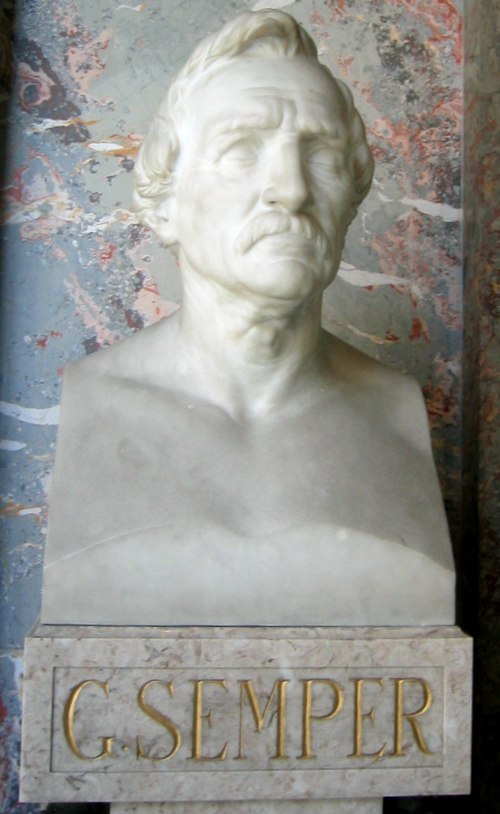
Gottfried Semper