Textile
Videos
Textile is an umbrella term that includes various fiber-based materials, including fibers, yarns, filaments, threads, different fabric types, etc. At first, the word "textiles" only referred to woven fabrics. However, weaving is not the only manufacturing method, and many other methods were later developed to form textile structures based on their intended use. Knitting and non-woven are other popular types of fabric manufacturing. In the contemporary world, textiles satisfy the material needs for versatile applications, from simple daily clothing to bulletproof jackets, spacesuits, and doctor's gowns.

Handmade floral patterns on textiles, The production of textiles which were initially artisanal work, has grown into a vast field today that includes the production of fibers, yarns, fabrics, and various fibrous products for different domestic and industrial usages.

In textile production, longitudinal yarns are referred to as warp and are interlaced with weft or filing yarns to create a woven fabric.
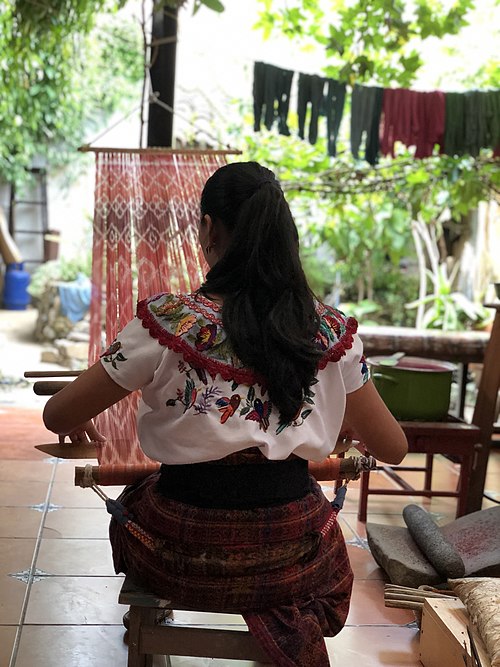
Weaving

Cloth merchant's shop
Weaving
Videos
Weaving is a method of textile production in which two distinct sets of yarns or threads are interlaced at right angles to form a fabric or cloth. Other methods are knitting, crocheting, felting, and braiding or plaiting. The longitudinal threads are called the warp and the lateral threads are the weft, woof, or filling. The method in which these threads are interwoven affects the characteristics of the cloth.
Cloth is usually woven on a loom, a device that holds the warp threads in place while filling threads are woven through them. A fabric band that meets this definition of cloth can also be made using other methods, including tablet weaving, back strap loom, or other techniques that can be done without looms.


A satin weave, common for silk, in which each warp thread floats over 16 weft threads

A Bangladesh Ansar officer weaving on duty.

Weaving pattern cards used by Skye Weavers, Isle of Skye, Scotland