Áo giao lĩnh
Videos
The áo giao lĩnh, referred to as the giao lãnh y in Literary Chinese texts. Folk often call it áo tràng vạt or áo tràng xiên, referred to as áo tràng, was a traditional cross-collared robe worn by Vietnamese before the 19th century. It was influenced from Han Chinese clothing and was typically worn by the royalty, the aristocracy, the nobility, and the commoners. During the Nguyễn dynasty, the áo ngũ thân was commonly worn and the áo giao lĩnh was only worn in formal occasions.

The Vietnamese civilians (man and woman) in Lê dynasty wearing áo giao lĩnh.

Examination graduates wearing an áo giao lĩnh.
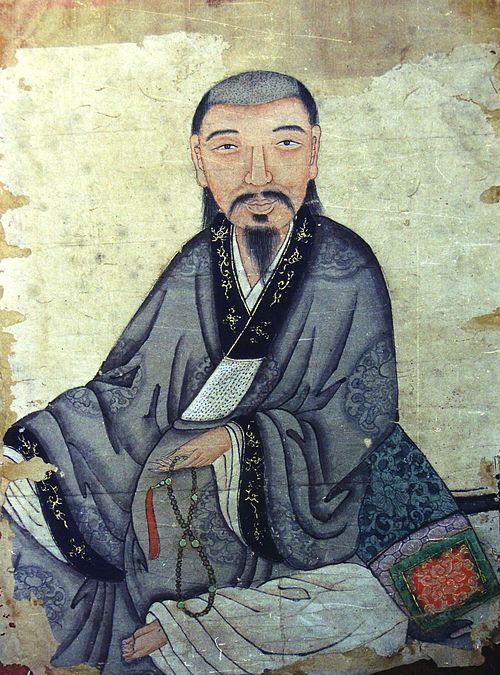
Portrait of Prince Nguyễn Phúc Thuần from the 17th century. He wears a cross-collared robe (áo giao lĩnh) which was commonly worn by Vietnamese aristocrats before the 19th century

Giảng học đồ (講學圖; Lecture Picture), 18th century, Hanoi Museum of National History. Scholars and students wear cross-collared gowns (áo cổ chéo) – unlike the buttoned áo dài
Hanfu
Videos
Hanfu, are the traditional styles of clothing worn by the Han Chinese. There are several representative styles of hanfu, such as the ruqun, the aoqun, the beizi and the shenyi, and the shanku.

a section of The Night Revels of Han Xizai, painted in the 10th century.

Wanli Emperor in mianfu regalia

Ming Ruqun stored by the House of Confucius

A group of musicians in Qixiong; Five dynasties.