Ásatrúarfélagið
Videos
Ásatrúarfélagið, also known simply as Ásatrú, is an Icelandic religious organisation of heathenry. It was founded on the first day of summer in 1972, and granted recognition as a registered religious

Hilmar Örn Hilmarsson and other members of Ásatrúarfélagið walk to a blót at Þingvellir in the summer of 2009.

Jörmundur Ingi is sworn in as allsherjargoði in July 1994.

Hilmar Örn Hilmarsson, fourth allsherjargoði, at a ceremony in June 2009
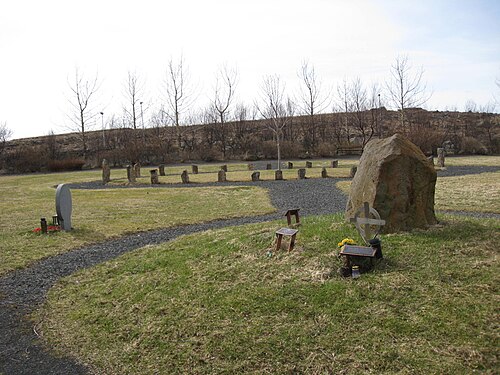
The Ásatrú graveyard in Reykjavík
Heathenry, also termed Heathenism, contemporary Germanic Paganism, or Germanic Neopaganism, is a modern pagan religion. Scholars of religious studies classify it as a new religious movement. Developed
Ásatrúarfélagið
…Ásatrúarfélagið (Icelandic: , Ásatrú Fellowship), also known simply as Ásatrú, is an Icelandic religious organisation of heathenry (in Iceland also called Ásatrú, "ás faith"). It was founded on the first day of summer in 1972, and granted recognition as a registered religious…

A modern replica of a Viking Age pendant representing Mjölnir, the hammer of the god Thor; such pendants are often worn by Heathens.
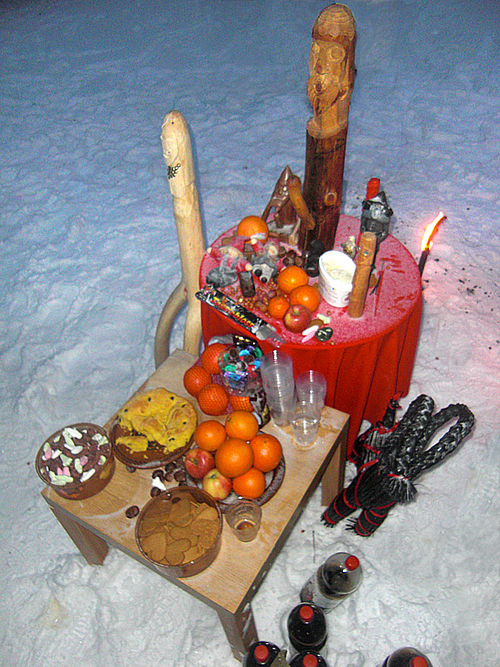
Outdoor altar to mark Yule 2010, set up by the Swedish Forn Sed Assembly in Gothenburg, Västergötland

An álfablót ritual held at Getsjön in Västergötland, Sweden, in 2009

Heathen ritual space marked out by an engraved wooden pillar, located on The Wrekin in Shropshire, England