Æthelbald, King of Wessex
Videos
Æthelbald was King of Wessex from 855 or 858 to 860. He was the second of five sons of King Æthelwulf. In 850, Æthelbald's elder brother Æthelstan defeated the Vikings in the first recorded sea battle

Æthelbald in the early 14th-century Genealogical Roll of the Kings of England

Memorial to Æthelbald and Æthelberht in Sherborne Abbey

Fake coins of Æthelwulf and Æthelbald
Judith of Flanders
Videos
Judith of Flanders was a Carolingian princess who became Queen of Wessex by two successive marriages and later Countess of Flanders. Judith was the eldest child of the Carolingian emperor Charles the
Æthelbald, King of Wessex
…earlier. On his way back from Rome, Æthelwulf stayed for several months with Charles the Bald, King of the West Franks, whose twelve-year-old daughter Judith he married. When he returned to England in 856, Æthelbald refused to give up the crown. Most historians believe that Æthelbald continued to be king of…

A depiction of King Æthelwulf from the 14th century

Baldwin I of Flanders and his wife Judith of France, by Jan van der Asselt, ca. 1372/73. Currently displayed at the Gravenkapel, Kortrijk, Belgium.
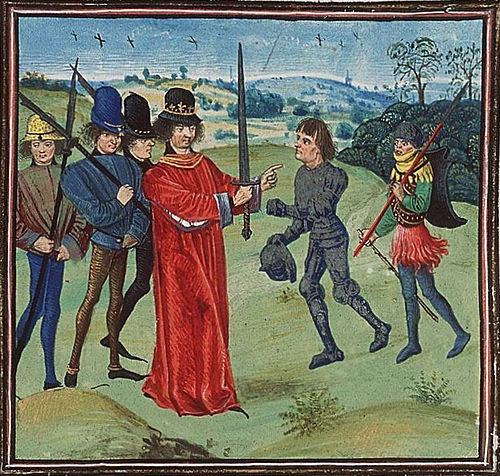
A depiction of the institution of Baldwin as Margrave of Flanders from circa 1450-1460 by Ægidius of Roya