Æthelstan A
Videos
Æthelstan A is the name given by historians to an unknown scribe who drafted charters, by which the king made grants of land, for King Æthelstan of England between 928 and 935. They are an important source for historians as they provide far more information than other charters of the period, showing the date and place of the grant, and having an unusually long list of witnesses, including Welsh kings and occasionally kings of Scotland and Strathclyde.

Israel the Grammarian
Videos
Israel the Grammarian was one of the leading European scholars of the mid-tenth century. In the 930s, he was at the court of King Æthelstan of England (r. 924–39). After Æthelstan's death, Israel successfully sought the patronage of Archbishop Rotbert of Trier and became tutor to Bruno, later the Archbishop of Cologne. In the late 940s Israel is recorded as a bishop, and at the end of his life he was a monk at the Benedictine monastery of Saint-Maximin in Trier.

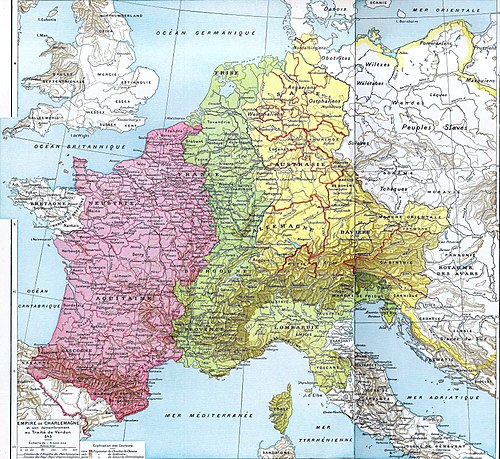
The Carolingian Empire at the height of its size, shortly before the birth of Israel

A twelfth-century illustration of the Alea evangelii, the board game that Israel and Franco drew for Dub Innse