Óðr
Videos
In Norse mythology, Óðr or Óð, anglicized as Ódr or Ód, is a god associated with desire, passion and inspiration. The Prose Edda and Heimskringla, written in the 13th century by Snorri Sturluson, both

Ódr and Freyja in Óðr once again begins another journey, leaving Freyja distressed by Carl Emil Doepler 'The Elder' (1882).
Freyja
Videos
In Norse mythology, Freyja is a goddess associated with love, beauty, fertility, war, gold, and seiðr. Freyja is the owner of the necklace Brísingamen, rides a chariot pulled by two cats, is accompani
Óðr
…desire, passion and inspiration. The Prose Edda and Heimskringla, written in the 13th century by Snorri Sturluson, both describe Óðr as the husband of Freyja, the father of Hnoss and Gersemi, and one of the Vanir. A number of theories have been proposed about Óðr, generally that he is a hypostasis of the god…

A depiction of Freyja. Within Norse paganism, Freyja was the deity primarily associated with seiðr.

Freja (1905) by John Bauer

Freyja and Loki flyte in an illustration (1895) by Lorenz Frølich.
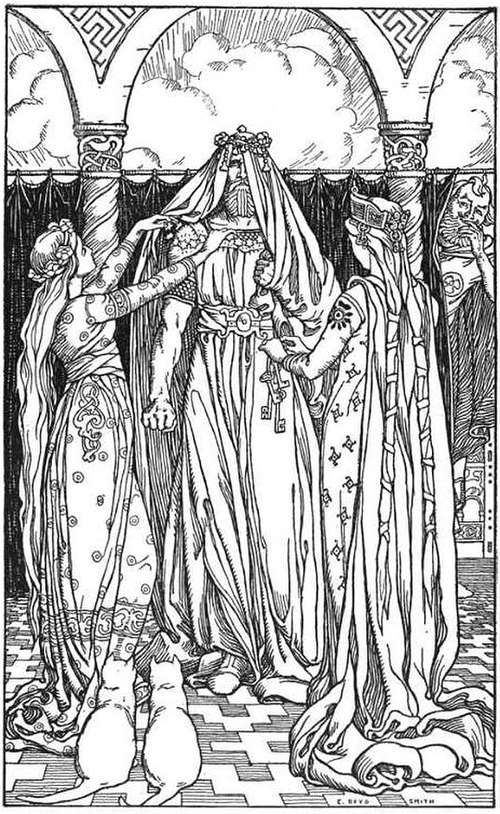
While Freyja's cats look on, the god Thor is unhappily dressed as Freyja in Ah, what a lovely maid it is! (1902) by Elmer Boyd Smith.