Śvetāmbara
Videos
The Śvetāmbara is one of the two main branches of Jainism, the other being the Digambara. Śvetāmbara in Sanskrit means "white-clad", and refers to its ascetics' practice of wearing white clothes, whic
An idol of the 23rd tirthankara Parshvanatha at a Jain temple in Mysore, depicting Śvetāmbara iconography


14th century Ārya Sthūlabhadra idol at the Khaḍākhoṭadī no Pāḍo Jaina Temple at Patan

The Adishvara temple at Shatrunjaya, one of the principal pilgrimage centres of the Śvetāmbara Mūrtipūjaka tradition

Carved marble dome of a Jain temple at the Dilwara Temples, Mount Abu
Digambara
Videos
Digambara is one of the two major schools of Jainism, the other being Śvetāmbara. The Sanskrit word Digambara means "sky-clad", referring to their traditional monastic practice of neither possessing n
Śvetāmbara
…The Śvetāmbara (; also spelled Shwetambara, Shvetambara, Svetambara or Swetambara) is one of the two main branches of Jainism, the other being the Digambara. Śvetāmbara in Sanskrit means "white-clad", and refers to its ascetics' practice of wearing white clothes, which sets it apart from the Digambara or…
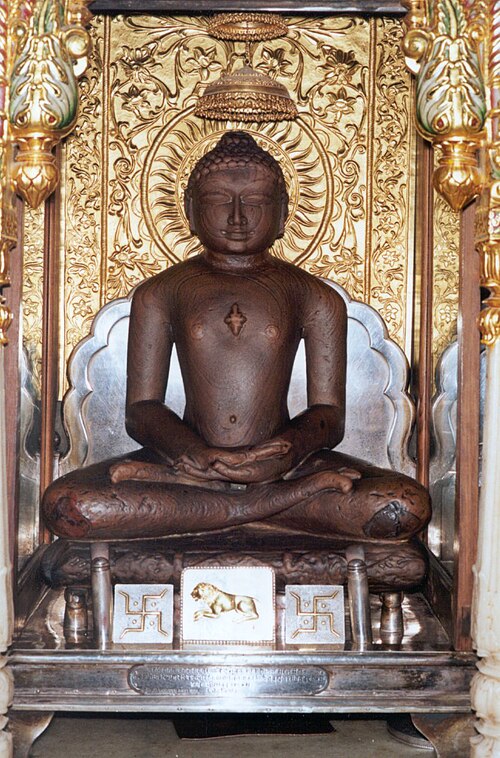
Idol of Mahavira at Shri Mahavir Ji Temple, depicting Digambara iconography

Image depicting Acharya Kundakunda

Jain temple painting explaining Anekantavada with Blind men and an elephant

The longest inscription at the site, and the earliest known Tamil-Brāhmī inscription. It records the gift by the Pandya king Neṭuñceḻiyaṉ of a monastery to the senior Jain monk Nanta-siri Kuvaṉ.