ʻAbdu'l-Bahá
Videos
ʻAbdu'l-Bahá, born ʻAbbás, was the eldest son of Baháʼu'lláh, founder of the Bahá’í Faith, who designated him to be his successor and head of the Baháʼí Faith from 1892 until 1921. ʻAbdu'l-Bahá was la
ʻAbdu'l-Bahá in c. 1912


ʻAbdu'l-Bahá (right) with his brother Mírzá Mihdí
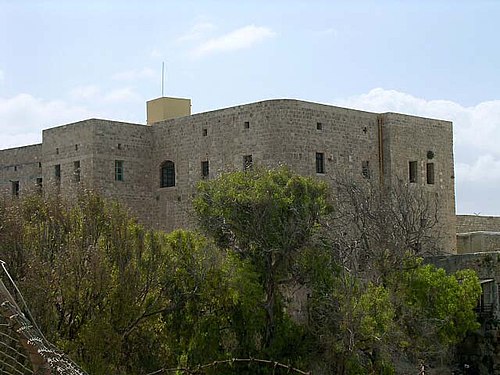
Prison in ʻAkká where Baháʼu'lláh and his family were housed

Early Western Baháʼí pilgrims. Standing left to right: Charles Mason Remey, Sigurd Russell, Edward Getsinger and Laura Clifford Barney; Seated left to right: Ethel Jenner Rosenberg, Madam Jackson, Shoghi Effendi, Helen Ellis Cole, Lua Getsinger, Emogene Hoagg
Shoghi Effendi
Videos
Shoghí Effendi was Guardian of the Baháʼí Faith from 1922 until his death in 1957. As the grandson and successor of ʻAbdu'l-Bahá, he was charged with guiding the development of the Baháʼí Faith, inclu
ʻAbdu'l-Bahá
…Effendi came at a difficult time following the death of his mother and uncle. The surviving children (all daughters) were; Ḍíyáʼíyyih K͟hánum (mother of Shoghi Effendi) (d. 1951) Túbá K͟hánum (1880–1959) Rúḥá K͟hánum and Munavvar K͟hánum (d. 1971). Baháʼu'lláh wished that the Baháʼís follow the example of ʻAbdu'l-Bahá…

Shoghi Effendi in Haifa, 1921

The young Shoghi, c. 1905

Shoghi Effendi before 1940

One of Shoghi Effendi's earliest letters as Abdu'l-Bahá's amanuensis, 1919