A violent volcanic eruption occurred in the early hours of 10 June 1886 at Mount Tarawera, near Rotorua on New Zealand's North Island. The eruption reached an estimated volcanic explosivity index of 5

Mount Tarawera in Eruption by Charles Blomfield

The Phantom Canoe: A Legend of Lake Tarawera, oil on canvas by Kennett Watkins

Former location of the village of Moura in 1891

Te Wairoa, "The Buried Village"
Plinian eruption
Videos
Plinian eruptions or Vesuvian eruptions are volcanic eruptions characterized by their similarity to the eruption of Mount Vesuvius in 79 AD, which destroyed the ancient Roman cities of Herculaneum and
1886 eruption of Mount Tarawera
…in Eruption by Charles Blomfield Volcano Mount Tarawera Start date 10 June 1886 Start time 2:00 a.m. End date 10 June 1886 End time 8:00 a.m. Type Plinian Location North Island, New Zealand VEI 5 Impact c. 120 killed, Pink and White Terraces destroyed, formation of Waimangu Volcanic Rift Valley, enlargement…

1822 artist's impression of the eruption of Mount Vesuvius in 79, depicting what the AD 79 eruption may have looked like, by the English geologist George Julius Poulett Scrope. Lightning is depicted around the rising column of ash and gas.

A stone pine, the type of tree used by Pliny the Younger to describe the eruption
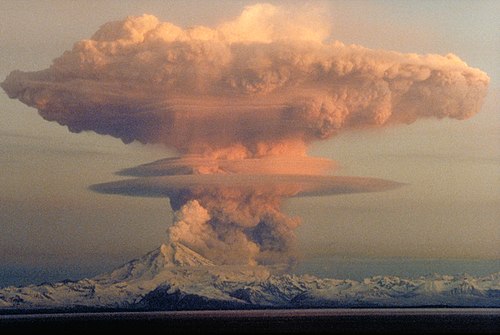
Eruption cloud from Redoubt Volcano on 21 April 1990 as viewed to the west from the Kenai Peninsula, more than 60 km (37 mi) from the volcano's summit

April 2015, subplinian eruption of Calbuco