The 1937 Social Credit backbenchers' revolt took place from March to June 1937 in the Canadian province of Alberta. It was a rebellion against Premier William Aberhart by a group of backbench members

William Aberhart's first cabinet, pictured with him in 1935, remained intact until late in 1936. By August 1937, four of its eight members had resigned or been fired.

William Aberhart won the 1935 Alberta election on the strength of his advocacy of social credit, an economic theory that he said could restore prosperity to the depression-ridden province.

Provincial Treasurer Charles Cockroft's January 1937 resignation caused the public to notice the conflict within the Social Credit caucus

The budget of Solon Low (right) was the catalyst to the insurgents' decision to make their discontent public.
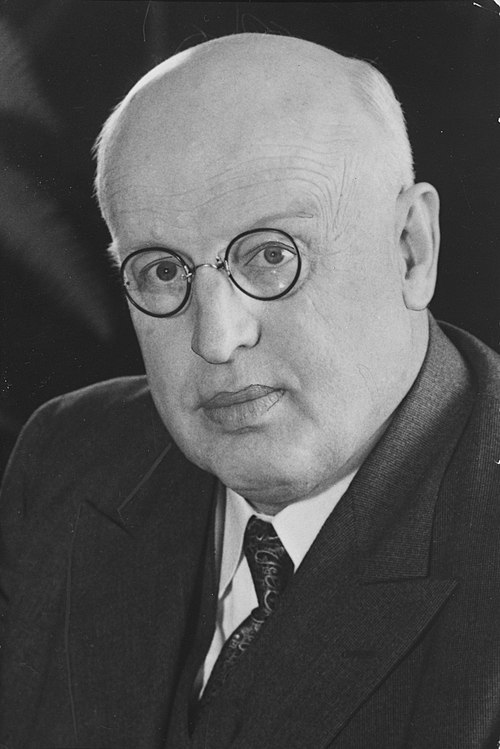
John Hugill
Videos
John William Hugill was a Canadian lawyer and politician who served as Attorney General of Alberta from 1935 until 1937. Born in England, he came to Canada and studied law before setting up a practice
1937 Social Credit backbenchers' revolt
…this statement, the Social Credit caucus invited Hargrave to explain his plan, which he did to the approval of many caucus members. Attorney-General John Hugill pointed out that the plan was unconstitutional, to which Hargrave replied that he was "not interested in legal arguments." Two weeks later, Hargrave…

John Hugill

Hugill (in top hat) as acting mayor of Calgary during the visit of Julian Byng, 1st Viscount Byng of Vimy and Lady Byng to that city, 1922

Hugill (in the foreground) looks on as William Aberhart (centre) and Prime Minister R.B. Bennett shake hands.
W aberhart