The 1998 bombing of Iraq was a major four-day bombing campaign on Iraqi targets from 16 to 19 December 1998, by the United States and the United Kingdom. On 16 December 1998, Bill Clinton announced that he had ordered strikes against Iraq. The strikes were launched as a result of Iraq's failure to comply with United Nations Security Council resolutions and its interference with United Nations Special Commission inspectors who were looking for weapons of mass destruction. The inspectors had been sent in 1997 and were repeatedly refused access to certain sites, this used by the United States to begin military action.
A Tomahawk cruise missile is fired from an Arleigh Burke-class destroyer during Operation Desert Fox in December 1998
A B-1B is loaded with bombs at Ellsworth AFB on 17 December 1998.
Two F/A-18C Hornet pilots on board USS Enterprise discussing the results of an air strike conducted on 17 December
Gen. Anthony C. Zinni briefs reporters at The Pentagon following Operation Desert Fox, 21 December 1998.
The Iraqi Armed Forces are the military forces of the Republic of Iraq. They consist of the Iraqi Army, the Iraqi Air Force, and the Iraqi Navy. Along with these three primary service branches, there exists the Iraqi Counter Terrorism Service and the Popular Mobilization Forces. The President of Iraq acts as the supreme commander as outlined by the constitution.
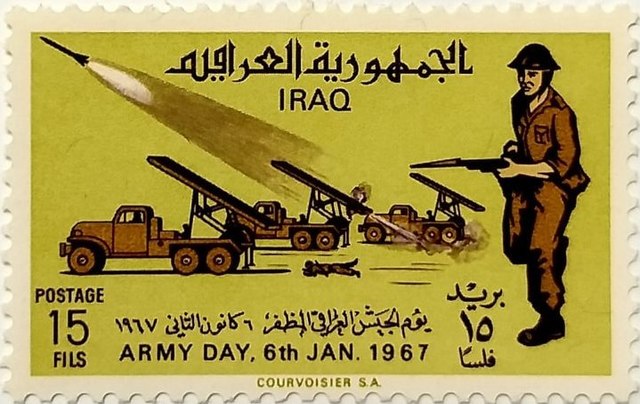
An Iraqi postage stamp of 15 fils, issued in 1967, on the occasion of the Iraqi Army Day, January 6.
An Iraqi T-72 tank fires.
Iraqi Army mountain gun in action during the anti-Barzani operations against a revolt in Kurdistan, June 1932.
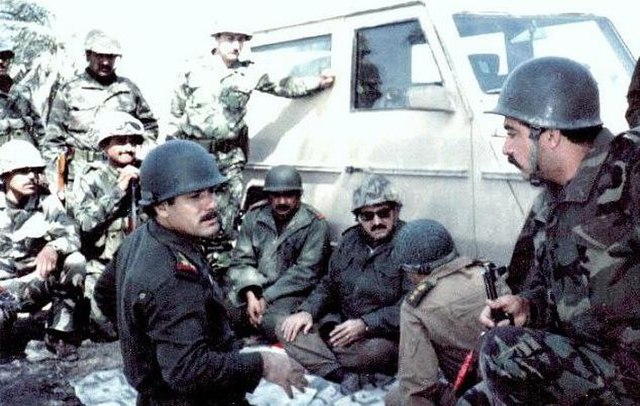
Iraqi commanders discussing strategy on the battlefront (1986)