1st Canadian Parachute Battalion
The 1st Canadian Parachute Battalion was an airborne infantry battalion of the Canadian Army formed in July 1942 during the Second World War; it served in North West Europe, Landing in Normandy during Operation Tonga, in conjunction with the D-Day landings of 6 June 1944 and in the airborne assault crossing of the River Rhine, Operation Varsity, in March 1945. After the end of hostilities in Europe, the battalion was returned to Canada where it was disbanded on 30 September 1945.
Cap Badge
Men of the battalion, about to leave for the D-Day transit camp, England, May 1944
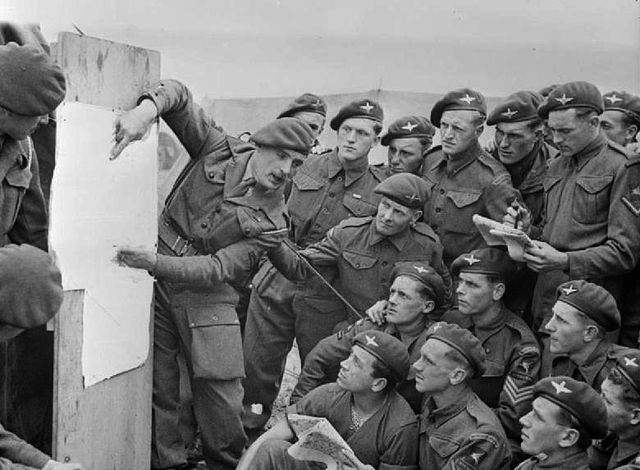
Brigadier James Hill (right), commander of the 3rd Parachute Brigade, briefs officers of the 1st Canadian Parachute Battalion, Carter Barracks, Bulford, England, 6 December 1943.
Operation Varsity was the greatest airborne operation of the war. Some 40,000 paratroops were dropped by 1,500 troop-carrying planes and gliders beginning on 24 March 1945.
Operation Tonga was the codename given to the airborne operation undertaken by the British 6th Airborne Division between 5 June and 7 June 1944 as a part of Operation Overlord and the D-Day landings during World War II.
British pathfinders of the 22nd Independent Parachute Company synchronising their watches in front of an Armstrong Whitworth Albemarle
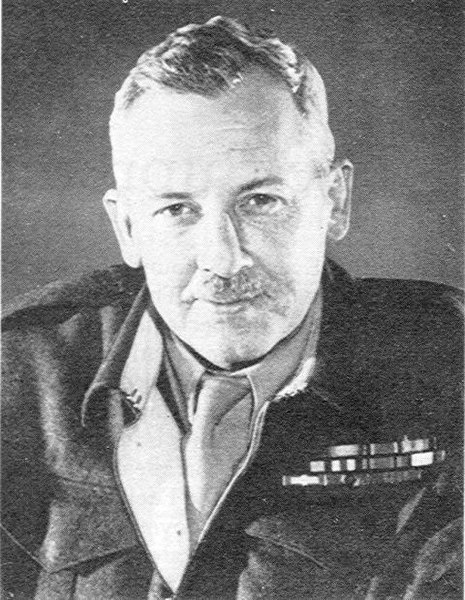
Lieutenant-General Frederick E. Morgan, the original planner of Operation Overlord.
Major-General Richard Gale, commanding the 6th Airborne Division, addresses his men (4–5 June 1944)
Men of 22nd Independent Parachute Company being briefed, in preparation for Tonga