The 1st Lithuanian–Belarusian Division was a volunteer unit of the Polish Army formed around December 1918 and January 1919 during the Polish–Soviet War. It was created out of several dozen smaller un
1st Lithuanian–Belarusian Division

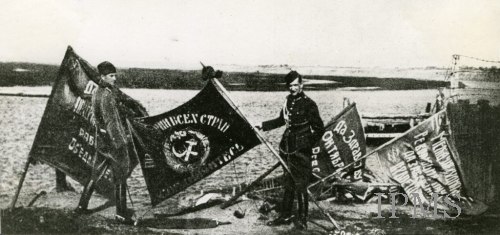
The Battle of Warsaw, the most important battle of the war, was one of the battles the 1st Lithuanian-Belarusian Infantry Division took part in.

1st Lithuanian-Belarusian Infantry Division suffered heavy losses in the Battle of Niemen.
The Republic of Central Lithuania, commonly known as the Central Lithuania, and the Middle Lithuania, was an unrecognized short-lived puppet state of Poland, that existed from 1920 to 1922. It was fou
1st Lithuanian–Belarusian Division
…commanded by Gen. Lucjan Żeligowski – occupied the Vilnius Region from the Lithuanian forces and formed the core of the armed forces of the disputed Republic of Central Lithuania. Following the elections held in Polish-occupied Vilnius and the state merger with Poland in 1923, the division was partially demobilized, while its…

Piłsudski's bi-lingual Proclamation to the inhabitants of the former Grand Duchy of Lithuania (April 1919).

Lithuanian postage stamps with overprints of Central Lithuania (Środkowa Litwa), made in 1920