32nd Divisional Artillery
The 32nd Divisional Artillery was a Royal Artillery force raised as part of 'Kitchener's Army' in early 1915. Recruited in Yorkshire, originally for the 31st Division, the units served with the 'Pals battalions' of the 32nd Division on the Western Front for three years. They saw action at the Somme, the pursuit to the Hindenburg Line, the German spring offensive, and the Allied Hundred Days Offensive.
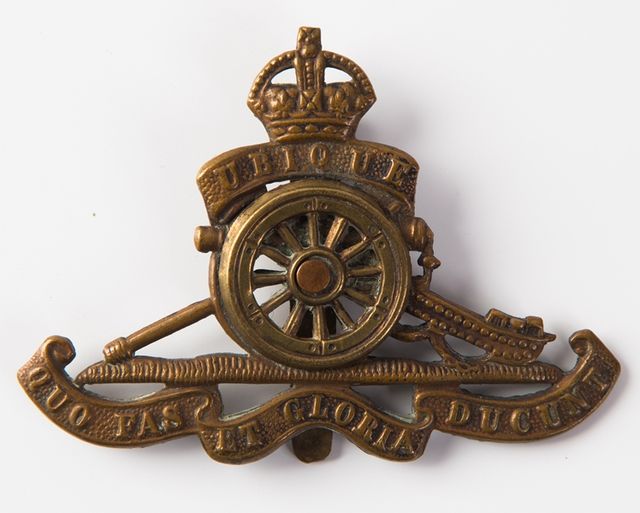
Royal Artillery cap badge
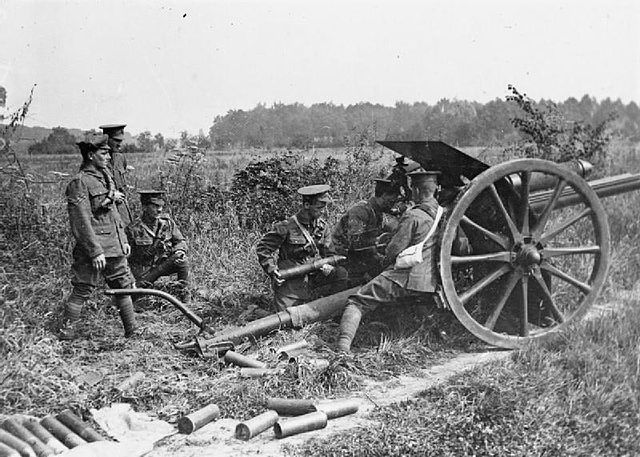
An 18-pounder in action on the Somme.
A 4.5-inch howitzer in action on the Somme.
A 9.45-inch heavy mortar, or 'flying pig' (this example on the Somme is manned by Australian troops).
32nd Division (United Kingdom)
The 32nd Division was an infantry division of the British Army that was raised in 1914, during the First World War. The division was raised from volunteers for Lord Kitchener's New Armies, made up of infantry 'Pals battalions' and artillery brigades raised by public subscription or private patronage. The division was taken over by the War Office in September 1915. It served in France and Belgium in the trenches of the Western Front for the duration of the war. It saw action at the Battle of the Somme, the Pursuit to the Hindenburg Line, the Defence of Nieuport, the German spring offensive, and the Allied Hundred Days Offensive beginning at the Battle of Amiens. After the Armistice it marched into Germany as part of the Army of Occupation.
Group of Tommies of the 2nd Battalion, Manchester Regiment, part of the 32nd Division, after the advance on the Ancre, possibly around Serre, January 1917.
Brigadier-General Frederick Lumsden, VC, killed in action 4 June 1918 while in command of 14th Brigade; posthumous portrait by H. Donald Smith.
Maj-Gen (later Gen Sir) Cameron Shute.