4th millennium BC
Videos
The 4th millennium BC spanned the years 4000 BC to 3001 BC. It marked a critical turning point in human history, characterized by the transition from late Neolithic agricultural societies into urban,

Monte d'Accoddi is an archaeological site in northern Sardinia, Italy, located in the territory of Sassari near Porto Torres. 4th millennium BC.

Sumerian priest-king from Uruk, Mesopotamia, circa 3300–3000 BC

Shengavit Settlement, c. 3300 BC

Pharaoh Scorpion II on the Scorpion Macehead, c. 3200 BC
Indus Valley Civilisation
Videos
The Indus Valley Civilisation, also known as the Indus Civilisation, was a Bronze Age civilisation in the northwestern regions of South Asia, lasting from 3300 BCE to 1300 BCE, and in its mature form
4th millennium BC
…The Maykop culture, a major Bronze Age archaeological culture in the Western Caucasus region of Southern Russia, began around 3700 BC. c. 3300 BC: Indus Valley civilisation (also known as Harappan civilization) begins in Harappa. Harappan script is developed. c. 4000 BC Fortified town at Amri on the west bank of the Indus…
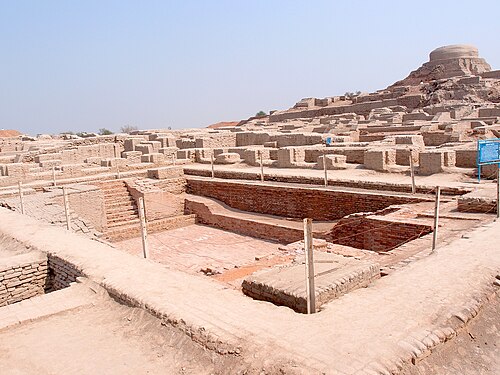
Ruins of Mohenjo-daro on the Indus River in Pakistan, the first South Asian UNESCO World Heritage Site; the Great Bath is in the foreground.

Miniature votive images or toys from Harappa, c. 2500 BCE, clay figurines of zebu oxen, a cart, and a chicken.
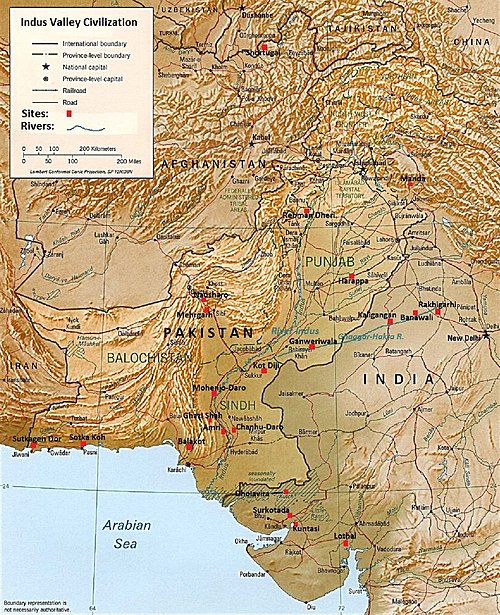
Major sites and extent of the Indus Valley Civilisation

Alexander Cunningham, the first director general of the Archaeological Survey of India (ASI), interpreted a Harappan stamp seal in 1875.