Abstract expressionism
Videos
Abstract expressionism in the United States emerged as a distinct art movement in the aftermath of World War II and gained mainstream acceptance in the 1950s, a shift from the American social realism
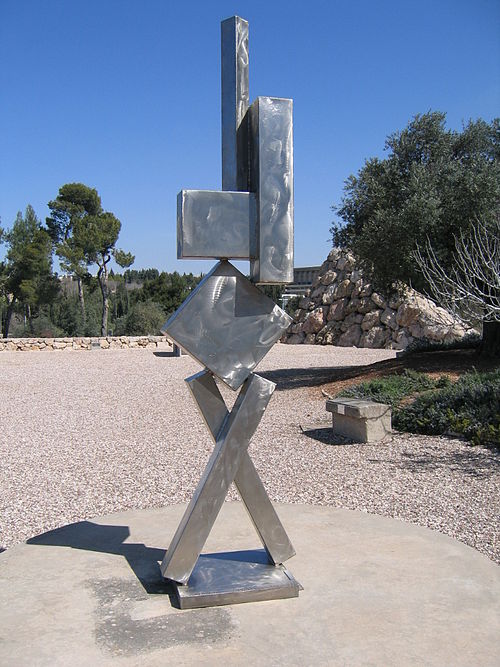
David Smith, Cubi VI (1963), Israel Museum, Jerusalem. David Smith was one of the most influential American sculptors of the 20th century.

Barnett Newman, Onement 1, 1948. During the 1940s Barnett Newman wrote several articles about the new American painting.

Richard Pousette-Dart, Symphony No. 1, The Transcendental, 1941–42

Arshile Gorky, The Liver Is the Cock's Comb (1944), oil on canvas, 731⁄4 × 98" (186 × 249 cm) Albright–Knox Art Gallery, Buffalo, New York. Gorky was an Armenian-born American painter who had a seminal influence on abstract expressionism. De Kooning said: "I met a lot of artists — but then I met Gorky. [...] He had an extraordinary gift for hitting the nail on the head; remarkable. So I immediately attached myself to him and we became very good friends."
Arshile Gorky
Videos
Arshile Gorky was an Armenian-American painter. At first influenced by Impressionism and Post-Impressionism, Gorky's later work presaged and exerted a seminal influence on abstract expressionism. Alon
Abstract expressionism
…American art in 1946 by the art critic Robert Coates. Key figures in the New York School, which was the center of this movement, included such artists as Arshile Gorky, Jackson Pollock, Franz Kline, Mark Rothko, Norman Lewis, Willem de Kooning, Adolph Gottlieb, Clyfford Still, Robert Motherwell, Theodoros Stamos, Jack…

Gorky in 1936

Arshile Gorky's The Artist and His Mother (c. 1926–1936), Whitney Museum of American Art, New York City.

Arshile Gorky's Portrait of Master Bill, 1929–1936. Oil on canvas.

Arshile Gorky working on Activities on the field, one of the panels for his mural Aviation at Newark Airport, for the Federal Art Project, 1936