The Acqua Vergine is one of several Roman aqueducts that deliver pure drinking water to Rome. Its name derives from its predecessor Aqua Virgo, which was constructed by Marcus Vipsanius Agrippa in 19 BC. Its terminal castellum is located at the Baths of Agrippa, and it served the vicinity of Campus Martius through its various conduits. In an effort to restore fresh water to Rome during the Renaissance, Pope Nicholas V, in 1453, renovated the main channels of the Aqua Virgo and added numerous secondary conduits under Campo Marzio. The original terminus, called a mostra, which means showpiece, was the stately, dignified wall fountain designed by Leon Battista Alberti in Piazza dei Crociferi. Due to several additions and modifications to the end-most points of the conduits during the years that followed, during the Renaissance and Baroque periods, the Acqua Vergine culminated in several magnificent mostre - the Trevi Fountain and the fountains of Piazza del Popolo.
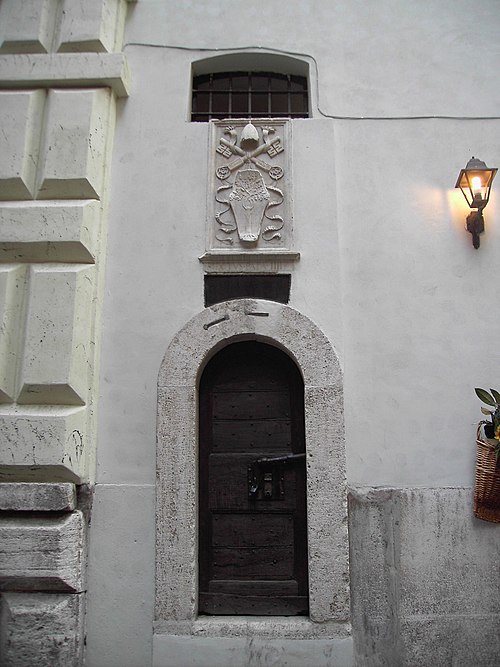
The still-functioning entrance to the inspection duct of the Acqua Vergine, at Via del Nazareno.
The Aqua Virgo was one of the eleven Roman aqueducts that supplied the city of ancient Rome. It was completed in 19 BC by Marcus Agrippa, during the reign of the emperor Augustus and was built mainly to supply the contemporaneous Baths of Agrippa in the Campus Martius.
Route of the Aqua Virgo
The only remains above ground, in via del Nazzareno
60 metres (200 ft) stretch of the aqueduct arches, recently found inside the Rinascente shopping complex
Modern day windlass used for an Anchor