Adoption
Videos
Adoption is a process whereby a person assumes the parenting of another, usually a child, from that person's biological or legal parent or parents. Legal adoptions permanently transfer all rights and
Sister Irene of New York Foundling Hospital with children. Sister Irene is among the pioneers of modern adoption, establishing a system to board out children rather than institutionalize them.


Trajan became emperor of Rome through adoption by the previous emperor Nerva, and was in turn succeeded by his own adopted son Hadrian. Adoption was a customary practice of the Roman Empire that enabled peaceful transitions of power.

At the monastery gate (Am Klostertor) by Ferdinand Georg Waldmüller

Josephine Baker adopted 10 children in the 1960s. In this photo they are on a tour of Amsterdam in 1964.
Adoption in ancient Rome
Videos
Adoption in ancient Rome was primarily a legal procedure for transferring paternal power to ensure succession in the male line within Roman patriarchal society. The Latin word adoptio refers broadly t
Adoption
…history. The Code of Hammurabi, for example, details the rights of adopters and the responsibilities of adopted individuals at length. The practice of adoption in ancient Rome is well-documented in the Codex Justinianus. Markedly different from the modern period, ancient adoption practices put emphasis on the political and…

Great Antonine Altar depicting imperial succession through adoption: Hadrian (right) adopted Antoninus Pius (center left), who in turn adopted the 17-year-old Marcus Aurelius (left) and the 8-year-old Lucius Verus; the head over Hadrian's left shoulder may represent the guardian genius of Aelius Verus, Lucius's late father
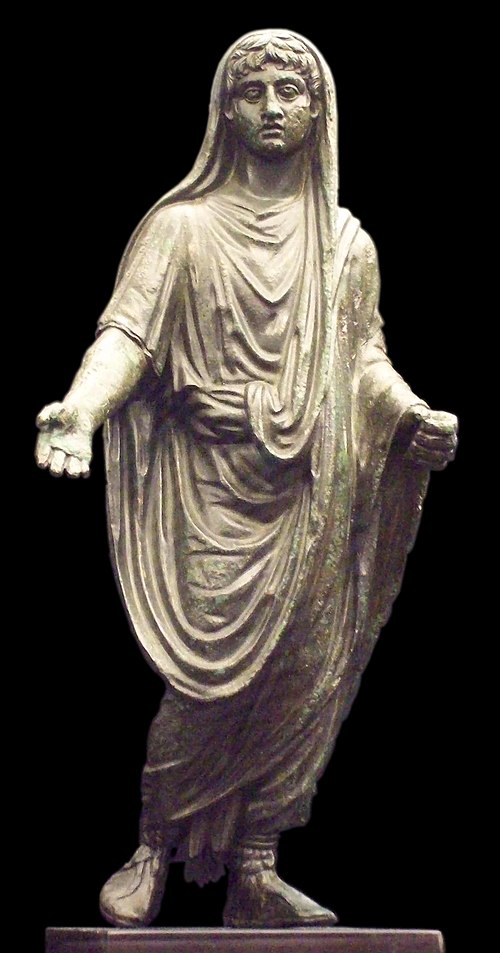
A family genius depicted as a paterfamilias (1st century)

Cameo (1st century) depicting Augustus, Livia, and Nero as a child

Denarius issued under Hadrian; the reverse shows him joining hands with Trajan with the legend ADOPTIO