Aeneas Mackintosh
Videos
Photos
Aeneas Lionel Acton Mackintosh was a British Merchant Navy officer and Antarctic explorer who commanded the Ross Sea party as part of Sir Ernest Shackleton's Imperial Trans-Antarctic Expedition, 1914–1917. The Ross Sea party's mission was to support Shackleton's proposed transcontinental march by laying supply depots along the latter stages of the march's intended route. In the face of persistent setbacks and practical difficulties, Mackintosh's party fulfilled its task, although he and two others died in the course of their duties. Mackintosh's first Antarctic experience was as second officer on Shackleton's Nimrod expedition, 1907–1909. Shortly after his arrival in the Antarctic, a shipboard accident destroyed his right eye, and he was sent back to New Zealand. He returned in 1909 to participate in the later stages of the expedition; his will and determination in adversity impressed Shackleton, and led to his Ross Sea party appointment in 1914.

Aeneas Mackintosh

Aeneas with his daughter, Pamela, c. 1912
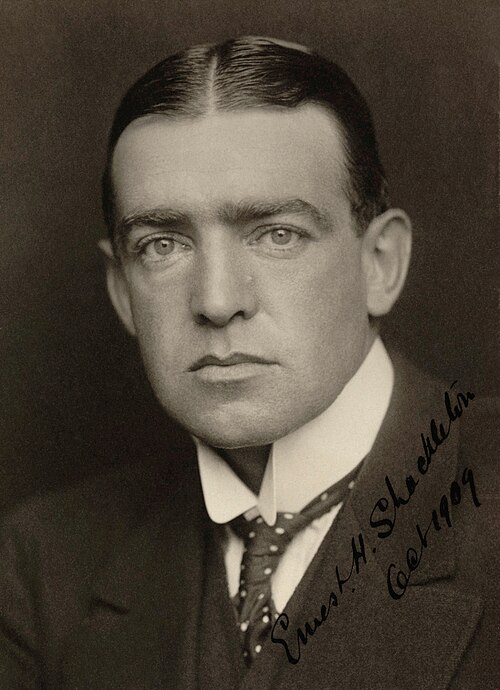
Ernest Shackleton, leader of the Nimrod Expedition

The Ross Sea party in Australia. Mackintosh is seated in the middle row, third from left. Ernest Joyce is standing, extreme left, back row. Arnold Spencer-Smith is the tall figure, centre back row
History of Antarctica
Videos
Photos
The history of Antarctica emerges from early Western theories of a vast continent, known as Terra Australis, believed to exist in the far south of the globe. The term Antarctic, referring to the opposite of the Arctic Circle, was coined by Marinus of Tyre in the 2nd century AD.

Painting of James Weddell's second expedition, depicting the brig Jane and the cutter Beaufoy

Admiral Fabian Gottlieb von Bellingshausen was one of the first to spot the continent of Antarctica.

The Canadian-born oceanographer Dr John Murray was the driving force behind the renewal of interest in Antarctic exploration at the beginning of the 20th century.

Adrien de Gerlache, leader of the Belgian expedition