Aeolis
Videos
Aeolis, or Aeolia, was an area in the west and northwestern region of Asia Minor, mostly along the coast, and also comprising several offshore islands, where the Aeolian Greek city-states were located

Ruins of the Agora of Smyrna

Aeolis, Kyme; Tetradrachm; Silver; c. 165–140 BC; Obverse: Head of the Amazon Kyme right, wearing taenia; Reverse: Horse walking right, skyphos (one handled cup) below, ΚΥΜΑΙΩΝ left, ΣΕΥΘΗΣ (magistrate) in exergue, all within laurel-wreath; 34.2mm, 16.409g; Reference: SNG Von Aulock 1640; Oakley obv. die 59; Sg4183 var
Hesiod
Videos
Hesiod was an Ancient Greek poet generally thought to have been active between 750 and 650 BC, around the same time as Homer.
Aeolis
…to the East Roman (Byzantine) empire and remained largely under Byzantine rule until the early 15th century, when the Ottoman Turks occupied the area. Hesiod Autolycus of Pitane…

A possible imaginative depiction of Hesiod (Roman copy of a Greek original)
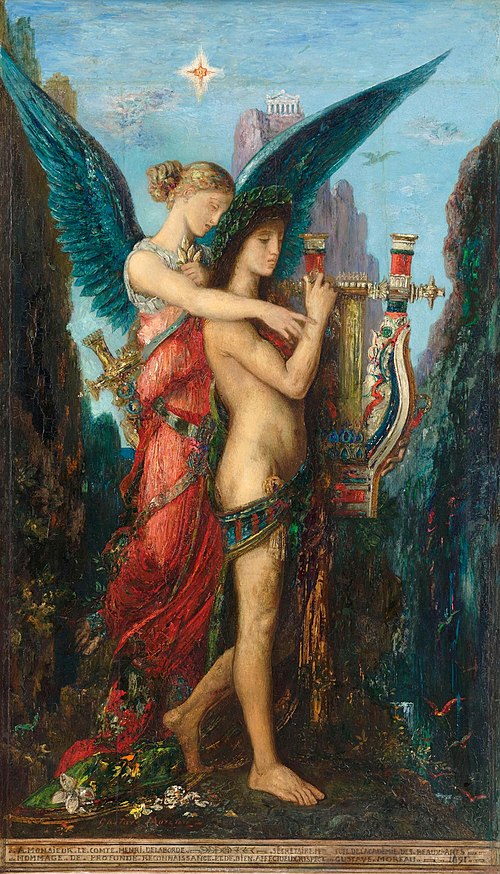
Hesiod and the Muse (1891), by Gustave Moreau. The poet is presented with a lyre, in contradiction to the account given by Hesiod himself, in which the gift was a laurel staff.

The Dance of the Muses at Mount Helicon by Bertel Thorvaldsen (1807). Hesiod cites inspiration from the Muses while on Mount Helicon.

Modern Mount Helicon. Hesiod once described his nearby hometown, Ascra, as "cruel in winter, hard in summer, never pleasant."