Agaja
Videos
Agaja was a king of the Kingdom of Dahomey, in present-day Benin, who ruled from 1718 until 1740. He came to the throne after his brother King Akaba. During his reign, Dahomey expanded significantly a
Emblem of King Agaja


Symbol of Agaja in place Goho.

The Oyo Empire and surrounding states around the time of Agaja

Dahomey Amazons in around 1890
Atlantic slave trade
Videos
The Atlantic slave trade or transatlantic slave trade involved the transportation by slave traders of enslaved African people to the Americas. This trade was operated by slave ships from both Europe a
Agaja
…1740. He came to the throne after his brother King Akaba. During his reign, Dahomey expanded significantly and took control of key trade routes for the Atlantic slave trade by conquering Allada (1724) and Whydah (1727). Wars with the powerful Oyo Empire to the east of Dahomey resulted in Agaja accepting tributary status…
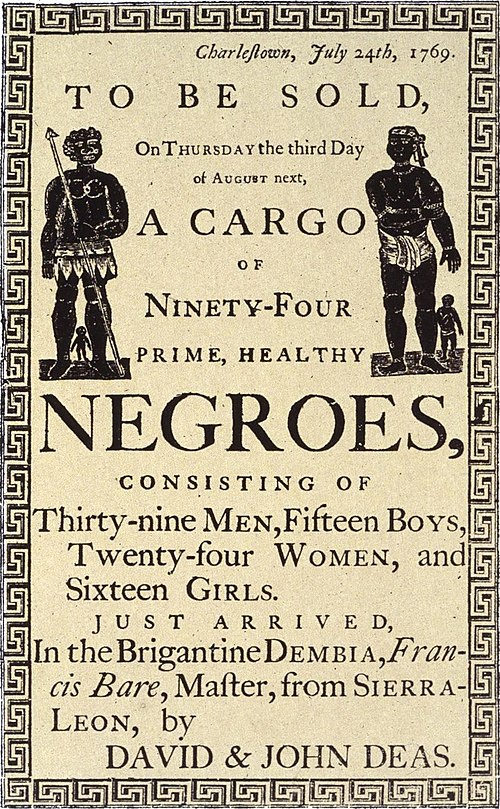
Reproduction of a handbill advertising a slave auction in Charleston, British Province of South Carolina, in 1769

Portuguese mariners used caravel ships and traveled south along the West African coast and colonised Cape Verde in 1462.

Noah curses Ham by Gustave Doré – the curse of Ham was used as a justification to enslave Africans.

Elmina Castle in the Guinea coast, present-day Ghana, was built in 1482 by Portuguese traders. Its primary purpose was trading in gold, but when the outward slave trade from the Gold Coast began, it was used in the slave trade. The Gold Coast was a late entrant to the outward slave trade (though there was an inward trade to supply workers in the gold mines).