Agathoclea
Videos
Agathoclea Theotropus was an Indo-Greek queen married to Menander I, who ruled in parts of northern India in the 2nd-century BC as regent for her son Strato I. Born in Bactria, likely to a noble famil

Coin of Agathokleia

Drachm of Agathoclea. The obverse with the queen's portrait and Greek inscription: BAΣIΛIΣΣHΣ ΘEOTPOΠOY AΓAΘOKΛEIAΣ, Basilissēs Theotropou Agathokleias, "Of the Goddess-like queen Agathoclea". Reverse with Strato I standing in armour, and Kharosthi legend: Maharajasa Tratarasa Stratasa Agathukreya, "Of Saviour King Strato and Agathoclea."

Coin of Strato I and Agathoclea. Obverse with the conjugate busts of Strato and Agathoclea, and Greek legend: ΒΑΣΙΛΕΩΣ ΣΩΤΗΡΟΣ ΣΤΡΑΤΩΝΟΣ ΚΑΙ ΑΓΑΘΟΚΛΕΙΑΣ, Basileōs Sōtēros Stratōnos Kai Agathokleias, "Of Saviour King Strato, and Agathoclea". Reverse with Athena Alkidemos throwing thunderbolt, and Kharosthi legend: Maharajasa Tratasara Dharmikasa Stratasa, "Of King Strato, the Saviour and Just (i.e. "of the Dharma")".

Coin of Agathoclea. Obverse with Agathoclea in profile. Reverse with the Greek straight bow and arrow container.
Indo-Greek Kingdom
Videos
The Indo-Greek Kingdom, also known as the Yavana Kingdom, were Hellenistic-era Greek kingdoms in the northwestern part of the Indian subcontinent covering most of modern-day Pakistan, parts of northwe
Agathoclea
…Agathoclea Theotropus (Ancient Greek: Ἀγαθόκλεια Θεότροπος, romanized: Agathokleia Theotropos; the epithet possibly means the Goddess-like) was an Indo-Greek queen married to Menander I, who ruled in parts of northern India in the 2nd-century BC as regent for her son Strato I. Born in Bactria, likely to a…

Greatest extent of the kingdom (2nd-century BCE)

Coin of Hippostratos

Pataliputra Palace capital, showing Greek and Persian influence, early Mauryan Empire period, 3rd century BC.
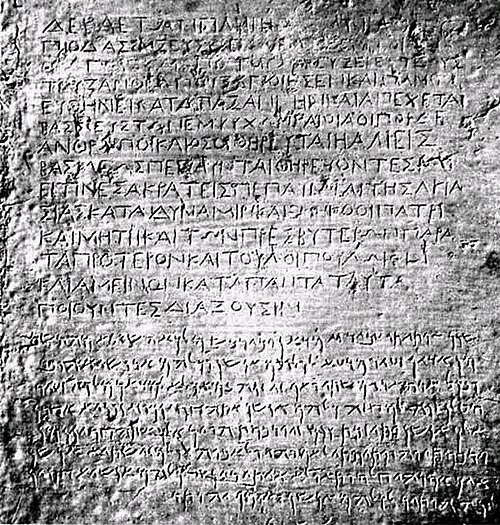
Kandahar Bilingual Rock Inscription (Greek and Aramaic) by king Ashoka, from Kandahar, Afghanistan.