Agricultural Adjustment Act
Videos
The Agricultural Adjustment Act of 1933 was a United States federal law of the New Deal era designed to boost agricultural prices by reducing surpluses. The government bought livestock for slaughter a

Agricultural Adjustment Administration representative in his New Mexico office (1941)

A Roosevelt County, New Mexico, farmer and a County Agricultural Conservation Committee representative review the provisions of the AAA farm program to determine how it can best be applied on that particular acreage in 1934.

Barn on tenant's farm in Walker County, Alabama, 1937

Senator Elmer Thomas (left) with Claude M. Hurst and John Collier, members of the Senate Indian Affairs Committee, and unassociated (directly) with the Thomas Amendment.
New Deal
Videos
The New Deal was a 1933–1938 series of economic, social, and political reforms in response to the Great Depression in the United States under President Franklin D. Roosevelt. He introduced the phrase
Agricultural Adjustment Act
…The Agricultural Adjustment Act (AAA) of 1933 was a United States federal law of the New Deal era designed to boost agricultural prices by reducing surpluses. The government bought livestock for slaughter and paid farmers subsidies not to plant…

Top left: Signing of the Tennessee Valley Authority Act, 1933 Top right: President Franklin D. Roosevelt Bottom: Works Progress Administration public mural

1935 cartoon by Vaughn Shoemaker in which he parodied the New Deal as a card game with alphabetical agencies
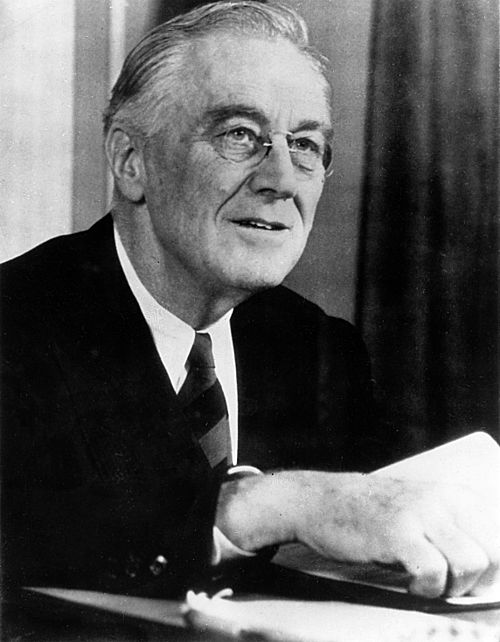
Roosevelt's ebullient public personality, conveyed through his declaration that "the only thing we have to fear is fear itself" and his "fireside chats" on the radio did a great deal to help restore the nation's confidence

Public Works Administration Project Bonneville Dam