Aguada, Puerto Rico
Videos
Aguada, originally San Francisco de Asís de la Aguada, is a town and municipality of Puerto Rico, located in the northwestern coastal valley region bordering the Atlantic Ocean, east of Rincón, south

Plaza de Aguada

Coliseo aguada

Coloso y los Cayures en Aguada, Puerto Rico

Hidden Beach in Aguada, Puerto Rico
Francis of Assisi
Videos
Giovanni di Pietro di Bernardone, known as Francis of Assisi, was an Italian mystic, poet and Catholic friar who founded the religious order of the Franciscans. Inspired to lead a Christian life of po
Aguada, Puerto Rico
…celebrates its patron saint festival in October. The Fiestas Patronales de San Francisco de Asis is a religious and cultural celebration in honor of Saint Francis of Assisi that generally features parades, games, artisans, amusement rides, regional food, and live entertainment. The festival has featured live performances…

A painting of Saint Francis by Philip Fruytiers
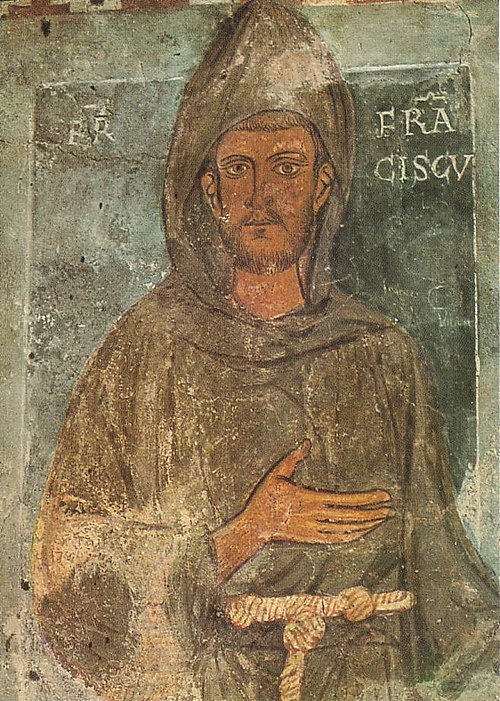
The oldest surviving depiction of Saint Francis is a fresco near the entrance of the Benedictine abbey of Subiaco, painted between March 1228 and March 1229. He is depicted without the stigmata, but the image is a religious image and not a portrait.

São Francisco das Chagas, painted by Ducarmo Teles

The Piccolino Chapel, Francis' legendary birthplace