Akrasia
Videos
Akrasia refers to the phenomenon of acting against one's better judgment—the state in which one intentionally performs an action while simultaneously believing that a different course of action would
Portrait in marble of Socrates. In the Protagoras, Plato has Socrates examine the concept of akrasia.

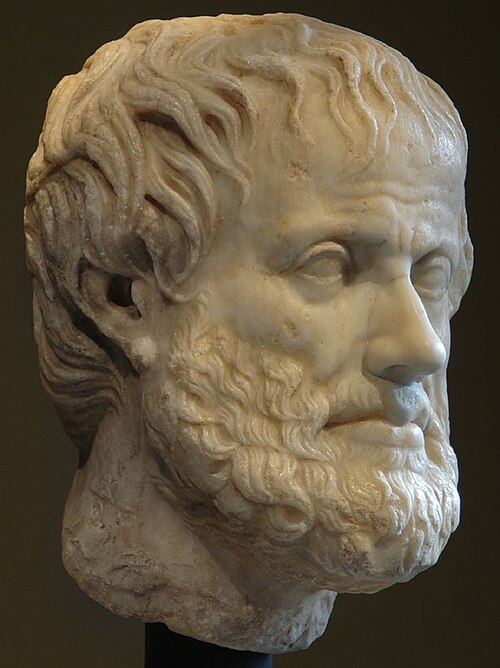
Marble portrait of Aristotle. In his work, Nicomachean Ethics, Aristotle approached Akrasia with skepticism, developing a systematic account of the phenomenon as internal conflicts of reason and desire.
Inferno (Dante)
Videos
Inferno is the first part of the Italian writer Dante Alighieri's 14th-century narrative poem the Divine Comedy, followed by Purgatorio and Paradiso. The Inferno describes the journey of a fictionalis
Akrasia
…would feel regret after the episode. Accordingly, akrasia is a state of moral weakness that falls between vice and virtue. In the structural division of Dante's Inferno, incontinence is the sin punished in the second through fifth circles. The mutual incontinence of lust was for Dante the lightest of the deadly sins…

Canto I from the Inferno, the first part of the Divine Comedy by Dante Alighieri

Gustave Doré's engravings illustrated the Divine Comedy (1861–1868). Here, Dante is lost at the start of Canto I of the Inferno.

Gustave Doré's illustration of Canto III: Arrival of Charon

The Harrowing of Hell, in a 14th-century illuminated manuscript, the Petites Heures de Jean de Berry