Alan Wace
Videos
Alan John Bayard Wace was an English archaeologist who served as director of the British School at Athens between 1914 and 1923. He excavated widely in Thessaly, Laconia, and Egypt, and at the Bronze
Wace at Asine in 1922

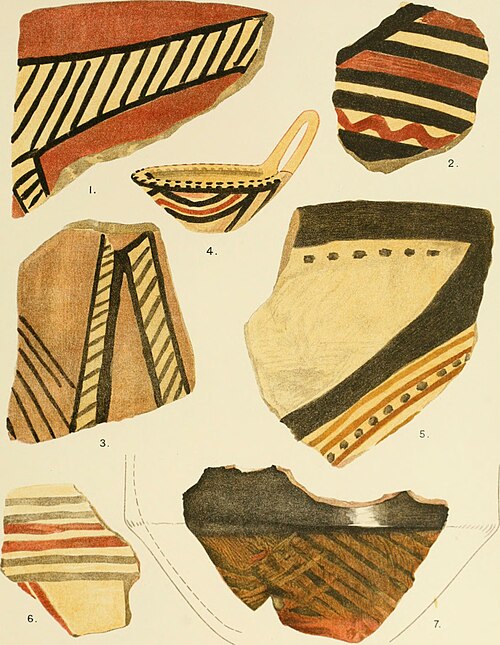
Drawings of potsherds from the sites of Tsangli and Rakhmani in Thessaly, from Wace and Thompson's Prehistoric Thessaly

French troops at the Beulé Gate in 1917, during the Allied occupation of Athens
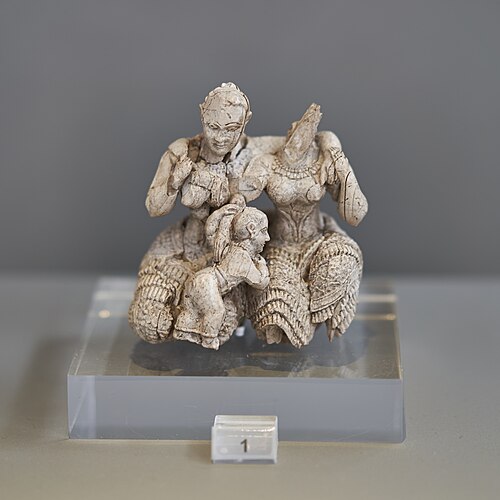
Figurine, known as the "Ivory Triad", found by Wace on the citadel of Mycenae in 1939, called "the most remarkable of all Mycenaean ivories" by Waterhouse in 1986
Tomb of Aegisthus
Videos
The Tomb of Aegisthus is a Mycenaean tholos tomb located near the citadel of Mycenae, Greece. It was constructed in the Late Helladic IIA period, approximately 1510–1450 BCE, and rediscovered in the 1
Alan Wace
…director. He also supported the excavation financially, donating £100 (equivalent to £3,864 in 2025) towards the excavation of the monument known as the Tomb of Aegisthus. The main priority of the excavations was to establish the chronological relationship between the shaft graves of Grave Circle A and the much larger…

The façade of the Tomb of Aegisthus, showing the small relieving triangle above the lintel

Part of the stomion, showing ashlar-masonry façade in front of rubble

View looking over the tomb, down the dromos. The small relieving triangle is just visible over the inner lintel.

View of the inner wall of the dromos, showing the use of rubble masonry to line it