Alexander Jannaeus
Videos
Alexander Jannaeus was the second king of the Hasmonean dynasty, who ruled over an expanding kingdom of Judea from 103 to 76 BC. A son of John Hyrcanus, he inherited the throne from his brother Aristo

A bronze prutah coin of Alexander Jannaeus. Obverse: the Paleo-Hebrew inscription "Jonathan the High Priest and the Council of the Jews". Reverse: a pair of Cornucopias or Horns of Plenty, which were a Hellenistic and Roman symbol. The pomegranate in the center of the coin gives it a Jewish aspect. Pomegranate appears on many Hasmonean coins. Itamar Atzmon Collection

Alexander Jannaeus feasting during the crucifixion of the Pharisees, engraving by Willem Swidde, 17th century

Swimming pool at the Hasmonean palace near Jericho, believed to have been built by Alexander
Hasmonean Judea
Videos
Hasmonean Judea, also known in part of its history as the Hasmonean kingdom, was an independent Jewish state in Judea and its surrounding regions, during the Hellenistic era of the Second Temple perio
Alexander Jannaeus
…to "Alexander Jannaeus"; Hebrew: יַנַּאי Yannaʾy; born Jonathan יהונתן) was the second king of the Hasmonean dynasty, who ruled over an expanding kingdom of Judea from 103 to 76 BC. A son of John Hyrcanus, he inherited the throne from his brother Aristobulus I. From his conquests to expand the kingdom to a bloody…

Hasmonean kingdom
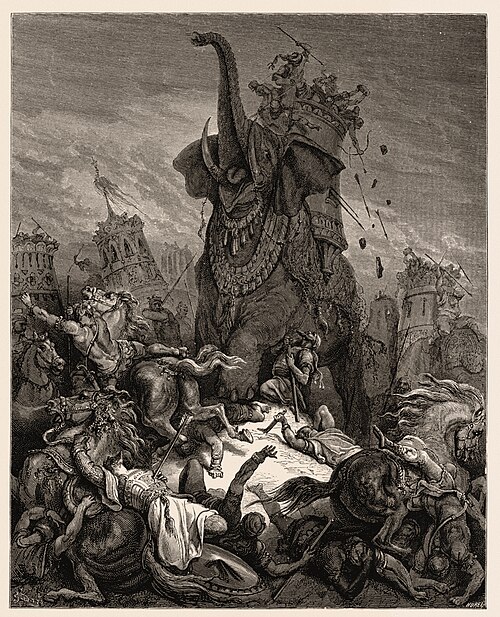
Battle of Beth Zechariah in 162 BCE, where the Maccabean rebels suffered a temporary setback. Illustration by Gustave Doré in 1866.

Bronze prutah of John Hyrcanus: Hebrew legend "Yehohanan (John) the High Priest and the Council of the Jews" within a wreath; reverse with double cornucopiae and a pomegranate between the horns

Prutah of Alexander Jannaeus with an anchor and the Greek inscription "King Alexander"