The Allied intervention in the Russian Civil War consisted of a series of multi-national military expeditions that began in 1918. The initial impetus behind the interventions was to secure munitions a

Japanese troops parading among other allied troops in Vladivostok, 1918
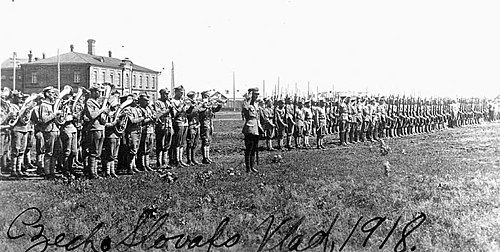
Czechoslovak troops in Vladivostok (1918)

Canadian Siberian Expeditionary Force, 1919

American troops parading in Vladivostok, August 1918
Vladivostok
Videos
Vladivostok is the largest city and the administrative center of Primorsky Krai and the capital of the Far Eastern Federal District of Russia. It is located around the Golden Horn Bay on the Sea of Ja
Allied intervention in the Russian Civil War
…collapsed, the Allies withdrew their forces from Russia by 1925. Allied troops landed in Arkhangelsk (the North Russia intervention of 1918–1919) and in Vladivostok (as part of the Siberian intervention of 1918–1922). The British also intervened in the Baltic theatre (1918–1919) and in the Caucasus (1917–1919…

Zolotoy Bridge 0 19

Vladivostok. GUM Department Store P8070703 2200

Vladivostok September Night. 2022. Slava Ivanov 02

Far Eastern Federal University 0 8